Pete Seanoa and the Royal Tahitians
In 1961 the Disneyland entertainment director Tommy Walker brought the Polynesian dancer Pete Seanoa into the park to build a resident troupe from the Islander community of Southern California. Seanoa’s company, the Royal Tahitians, reached a national audience in April 1962 through the Walt Disney’s Wonderful World of Color feature Disneyland After Dark. That June the Tahitian Terrace opened inside a seven-million-dollar expansion of Adventureland, the troupe holding that stage for three decades.
Walker had gathered the first dancers from the tight-knit Polynesian community of the Los Angeles basin. Seanoa shaped them into a nightly revue, one setting the hula of ʻŌlelo Hawaiʻi beside the sung poetry of Lea Faka-Tonga, the repertoire now documented by our arts and entertainment practice. He gave that tradition its footing in Anaheim, the staging and narration of Pacific culture for a mainland audience.
The Kauʻi-Pono dance company inherited the revue in 1972 and staged it until Aladdin’s Oasis replaced the location in 1993. After the closure, the performers trained there took the form outward into the lūʻau stages and cultural festivals of Orange County. That continuity of a Pacific performing tradition is what our heritage documentation keeps alive, the translation of chant and program notes for troupes still tracing their lineage to the Adventureland troupe. A fuller account of the revue and its founders appears in the Tahitian Terrace record.
The Islander Ground of Orange County
The Hawaiian and Tongan families of Orange County cluster less in Anaheim’s resort core than across the flatlands to its west and south, from Beach Boulevard toward Garden Grove and the older tracts of west Anaheim. These streets of church halls and kin compounds keep the language in Sunday service and kava circle, not in sightlines. Anaheim holds the labor center of that map, its hotel and arena district drawing Islander staff inward from the towns around it.
In practice, the metro divides its Pacific load by function, with Anaheim’s neighbors taking the parts outside its scope. We send maritime and port files to our Long Beach hub and the county’s civil and court matters to Santa Ana, keeping the Anaheim team on the hospitality and entertainment traffic of the Resort District. A client mapping service across the region finds the three nodes as one region under separate names.
The Convention Trade at the City Center
Two miles from the theme parks, the Anaheim Convention Center has drawn trade shows and congresses to the city since 1967, a meetings economy alongside the tourism gates. The calendar brings tens of thousands of visitors to the city through the year. Its exhibition halls fill with medical and religious conventions whose delegates come from across the Pacific. Hawaiian and Tongan attendees arrive inside those delegations as exhibitors and speakers.
A convention floor turns on signage and interpreted sessions delivered to a fixed timetable. Our business events and incentives service prepares that Pacific-language material for organizers bringing delegates through Anaheim, from booth text to on-site interpretation. The half-century of the center as a fixed civic asset lets us plan that support against a durable venue.
The Platinum Triangle Entertainment District
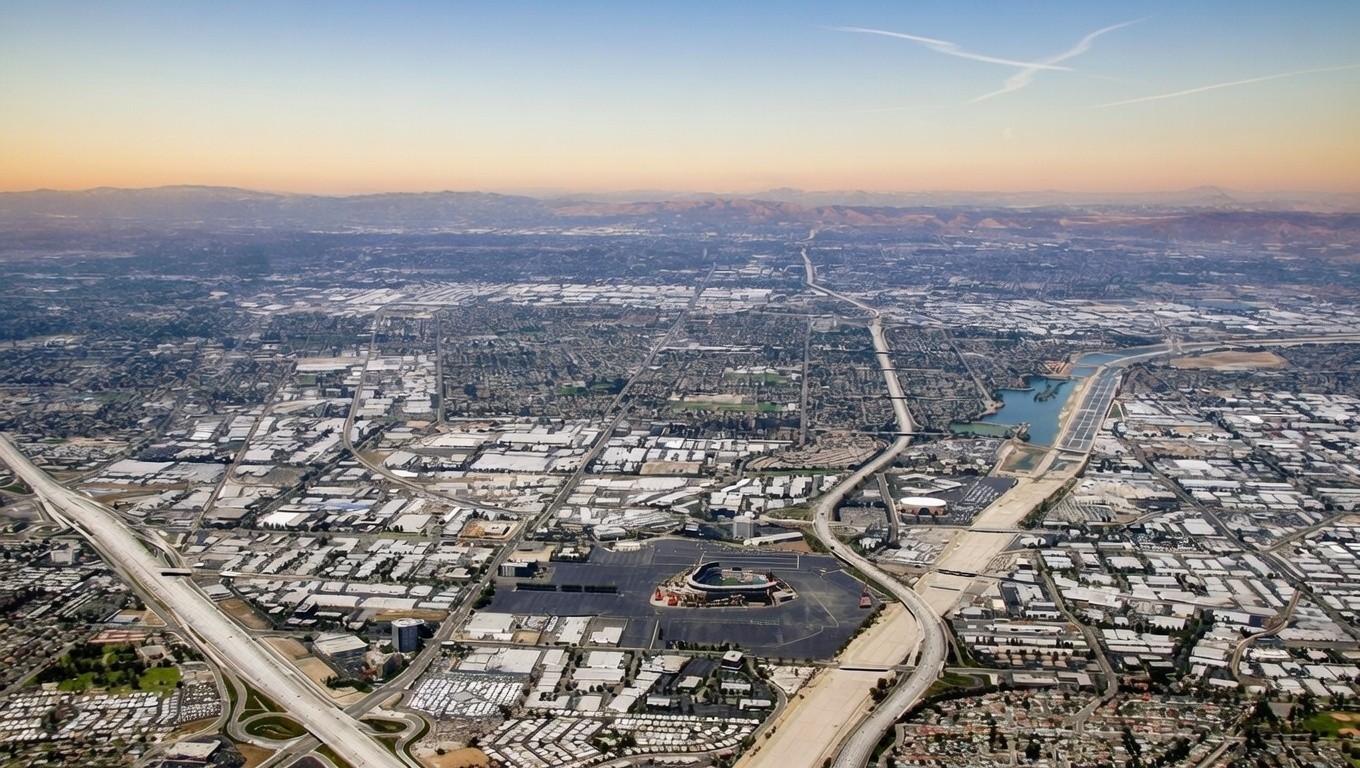
East of the Resort District, the Platinum Triangle has become Anaheim’s second stage, a hundred-acre entertainment district rising around the Honda Center and the regional transit hub. Backed by the arena’s ownership and municipal bond finance, the build sets a six-thousand-seat music hall and an outdoor amphitheater beside the arena and ballpark. Alongside that venue, the plan adds a market hall and two hotels next to Angel Stadium, with parkland across the district. Its program points the district toward touring productions and international audiences for the decades ahead.
A venue built for global touring needs multilingual front-of-house and production paperwork, from surtitle files to hospitality riders. Our arts and entertainment team produces the Hawaiian and Tongan versions for the Islander performers and patrons drawn from the Resort District hotels. The Platinum Triangle development file gives the public account of the build.
Civil Records for a Cross-Border Community
A Tongan family living in Anaheim stays tied to the Kingdom’s civil system, from birth and property records filed in Nukuʻalofa to the marriage and probate files requested by a mainland court. Because Tonga permits dual nationality, many of its citizens abroad keep active civil ties to the islands. The need remains constant even as the forms and fee schedules change, the certified translation of foreign civil documents into English for a United States authority.
We treat this as document preparation rather than a directory of offices, matching a Tongan or Hawaiian file to its receiving office. Because these rules change with treaty and statute, we maintain the current checklist on our cross-border and diaspora legal work page instead of on this one. The Anaheim team supplies the notarized translation and apostille support behind a Tongan passport renewal or a Hawaiian homestead claim, while this city page names none of the volatile detail.
Polynesian Linguistic Matrix for Anaheim Hub

Huri Translations
Tel. +689 89 205 483
[email protected]
PO BOX 365 Maharepa
98728 Mo'orea
French Polynesia
N°TAHITI 876649


Social