
Phosphate Royalties and a Collins Street Tower
For sixty-one years a three-government commission directed phosphate extraction on Naoero and Banaba from a head office in Melbourne. Constituted under the Nauru Island Agreement of 1919, the British Phosphate Commissioners had shipped rock south to fertilise Australian and New Zealand farms long ahead of the trusteeship era. The arrangement gave Melbourne the ledgers and Naoero the craters. Banabans were removed to Rabi in Fiji in 1945, with the digging continuing over their heads.
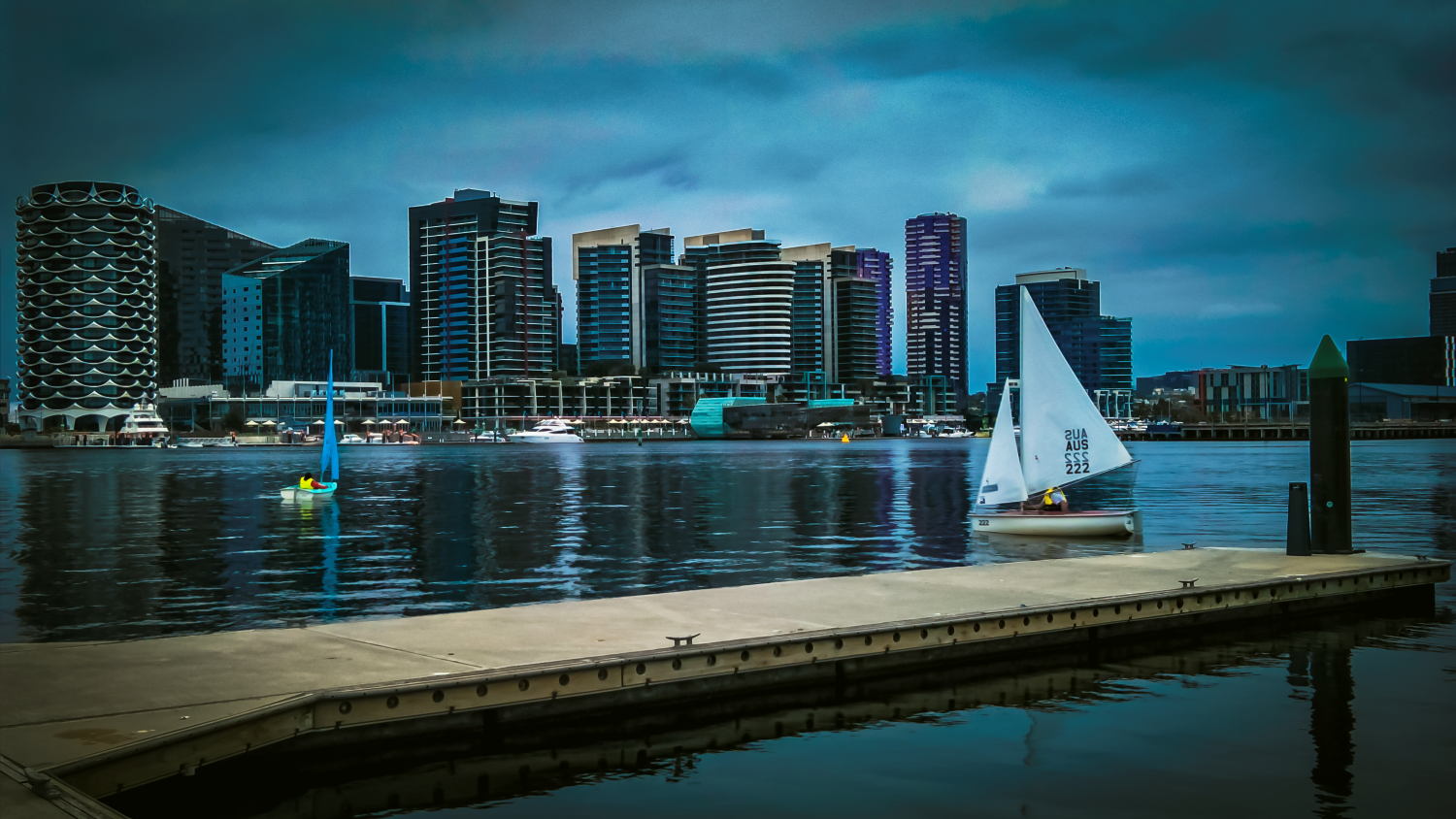
Its accounts flush with phosphate receipts, the Nauru Phosphate Royalties Trust bought the corner of Exhibition and Little Collins streets in 1972 for A$19 million. The trust did not build modestly. Two buildings of high heritage value came down against protest, to win the tower a Collins Street frontage. Finished in 1977, the 52-storey block ranked as the tallest in Melbourne for a year, then traded as Nauru House until receivers seized it in 2004. The address today is 80 Collins Street.
It was the name on the parapet that pulled a Pacific republic into an Australian business district. Paperwork then went two ways: royalty statements and rehabilitation claims into English, notices to the affected population into Nauruan. The second direction is ours, in Dorerin Naoero localisation and in environmental impact and compliance filings on mined-out ground. Ownership and sale dates are set down in the Nauru House article.
Hammer DeRoburt in Victoria
Schooled at the Gordon Institute in Geelong, Hammer DeRoburt went back to a Nauru still administered from Melbourne. Deportation to Truk under the Japanese occupation had interrupted that return until 1946. He became head chief in 1956 and pressed the trusteeship powers on royalties and rehabilitation, an argument sharpened by a Banaban grandmother whose birthplace was already hollowed out. Independence followed on 31 January 1968. His mother tongue was Nauruan, though the bargaining in Canberra proceeded in English.
DeRoburt understood that a republic of 21 square kilometres needed a full statute book in two languages. Our legislative materials practice begins at that point. To recover the mined ground he steered the island’s compensation case against Australia toward the International Court of Justice, a filing belonging to the longer case under decolonisation and self-determination. Chancellor of the University of the South Pacific from 1974, he put the regional argument in that decade as well.
In the city from which his homeland had been governed, DeRoburt died on 15 July 1992. Boe received the burial. His Victorian trace is domestic, a football code taken home from Geelong and since adopted as the national sport of Naoero. Heritage titles and personal-status papers from those decades arrive here in Nauruan translation, alongside community consultation files opened by those negotiations. The Australian Dictionary of Biography holds the dated record.
Pasifika Settlement in Casey and Wyndham
There is no one Pasifika quarter in Melbourne. Casey in the south-east counts some 11,300 Pasifika residents, Wyndham in the west close to 10,700, with Tarneit accounting for most of the Wyndham share. Pacific-born settlement in Wyndham began with three arrivals in 1966. Dandenong and Noble Park drew Samoan and Tongan families from the 1970s onward, an earlier phase of the movement.
Which language a Pasifika family keeps at home varies with the home archipelago. Samoan and Tongan rank high among Pasifika-born Victorians. Fijian follows them. Hindi appears in the count as well, an inheritance of indentured transport to Fiji between 1879 and 1916. However, fewer than one resident in twenty reports weak English. The pressure falls instead on clinical and legal terminology.
Melbourne’s Pasifika suburbs formed later than the Auckland and Sydney networks, which leaves their institutions young. Psychological assessment and family-court paperwork dominate the mental health line for Victorian providers, most of it produced under court timetables. Schools in Tarneit and Cranbourne generate the remainder, in enrolment and wellbeing documents. Our Sydney node absorbs the New South Wales equivalent.
Administrative Review of Protection Claims
The Victorian registry for federal migration matters is on William Street. Protection decisions arriving there face review years after the events at issue. Statements taken in transit lie in the file beside notes from offshore clinics and school papers from a third country. Interviews conducted through two interpreters produced most of those papers. Whether a claimant’s account survived the passage between them decides the review.
Only the tribunal can weigh what a protection claim is worth. Huri Translations does supply the English text underneath it, in Tok Pisin translation and Nauruan, on files originating in the regional processing arrangements.
Because instruments and deadlines change between sittings, a city page cannot track them. Our refugee protection and status determination section keeps the document-type list current. The historical thread from Naoero and Manus belongs to regional processing centre legacy, updated in one place. Melbourne contributes only the linguist in the room.
Crew Welfare at Swanson Dock
Dredging began on the lower Yarra in 1877 under the Melbourne Harbour Trust. The port then grew downstream. Coode Island still bears the surname of the engineer who straightened the river. Victoria Dock shut once container ships outgrew it, leaving the Docklands quarter to redevelopment. Swanson Dock opened as the first container terminal in 1969. Webb Dock East followed in 2017.
Crews on the ships calling here look nothing like the town ashore. Burmese and Filipino seafarers are manning much of the foreign-flag tonnage, under contracts signed in a fourth country and flagged in a fifth. Port-state control inspectors step onto those decks in Melbourne, yet the wage documents and safety findings need interpretation the moment a detention is raised.
What the berth generates is paperwork of a particular kind, detention notices and repatriation papers with a seafarer’s wages inside them. Crew lists go to Burmese translation. Hours-of-rest sheets and inspection findings belong to our merchant crew and port-state control practice. Channel depths and berth assignments stay with the Port of Melbourne, the landlord body accountable for the shipping channels.
Reference Laboratories for the Western Pacific
Hosting four WHO collaborating centres has made the Peter Doherty Institute for Infection and Immunity a fixed point in Western Pacific disease surveillance. A joint venture of the Royal Melbourne Hospital and the University of Melbourne, the institute occupies the Parkville campus alongside the measles and poliovirus reference laboratories for the region. Its Victorian Infectious Diseases Reference Laboratory has belonged to the Pacific Public Health Surveillance Network since that network began.
Neither the sequencing platform nor the reagent stock exists in most national laboratories of the region. Samples from Papua New Guinea therefore come to Parkville. While teaching in a room of Tok Pisin speakers, Melbourne staff established molecular measles and rubella testing at the Central Public Health Laboratory in Port Moresby. A parallel programme with Fiji and three other island states is running through to 2027.
Public health texts for Pacific ministries follow the samples down, from consent forms to radio scripts. The four centres and their reference roles are listed by the Doherty Institute. It falls to our Tok Pisin localisation line to put protocols and outbreak notices into the words spoken at the sampling table.
The Pacific Cultures Collection at Carlton Gardens
The Pacific Cultures Collection, large and unevenly documented, amounts to some 20,000 artefacts and more than 8,000 images gathered across Melanesia and the wider ocean. Its origins lie in colonial administration and interwar anthropology, with district officers such as Ernest Chinnery among the principal collectors. Te Vainui O Pasifika at Melbourne Museum puts a fraction of it on display. Provenance for the remainder is likely thin.
To correct a catalogue line, a curator must go back to the descendants. What a thing is called, they alone can say. A collector once labelled an object a club. Its makers name it otherwise, in a spelling no islander would use. Object titles and clan attributions entered the record from men with no command of the local speech.
Orthography leads the repair, a fix involving macrons and glottal marks absent from a nineteenth-century hand. Cultural education resources for museums push that correction into the gallery text. Cultural and intellectual property agreements over Pacific holdings govern who may reproduce an object afterwards. Museums Victoria publishes its collection data openly, the opening for anyone contesting a label.
Refugee & Pacific Linguistic Matrix for Melbourne Hub

Huri Translations
Tel. +689 89 205 483
[email protected]
PO BOX 365 Maharepa
98728 Mo'orea
French Polynesia
N°TAHITI 876649


Social


