The Langi of Lapaha
Twelve kilometres east of Nukuʻalofa, at Muʻa, terraced tombs of coral limestone mark the burial ground of the Tuʻi Tonga. Tongans name these structures langi. Archaeologists count about 22 of them, squared and stepped, across a compound of some 400 by 500 metres, more than 2,500 tons of quarried carbonate stone in all. Traditional genealogies record 39 holders of the Tuʻi Tonga title, most of them buried here. Muʻa was the third capital of Tonga from the thirteenth century until the nineteenth.
Listed with the Haʻamonga ʻa Maui trilithon at Heketā, the tombs entered the UNESCO tentative list in 2007. The nomination file shows that senior title-holders are buried at Lapaha to this day, which places the compound inside living genealogy. Rank and descent attach to particular langi, making the identification of a tomb a question of cultural and intellectual property.
What the excavation literature states in English, the oral account states otherwise in Lea Faka-Tonga. Reconciling the two versions falls to a translator with the genealogy in mind. Huri Translations takes on that crossing for research publications and the heritage dossiers underpinning them. The Tuʻi Tonga governed as far as eastern Fiji and Sāmoa. A genealogy from Lapaha can therefore decide a rank dispute in an Apia archive.
Lea Faka-Tonga and Vagahau Niuē
Of the two primary divisions of Polynesian, one went its own way early: Tongic, a branch of two surviving members. Lea Faka-Tonga is by far the larger. Vagahau Niuē belongs to an island roughly 480 kilometres to the east of Tongatapu, a passage crossed by canoe for centuries.
It is in Niu Silani that the greater part of the Vagahau Niuē speech community lives, with a much smaller population on Niue itself. Constitutional association gives Niueans a New Zealand passport, the mechanism driving that concentration. Accordingly, requests for Niuean translation arrive from families in Auckland and from the ministries in Alofi, with little in between.
While comparing the two grammars side by side, a client may assume that one Tongan linguist can absorb Niuean as well. Tongan speech divides into a commoner level and a chiefly level, with a further set of terms reserved for the monarch. Neither that stratification nor its vocabulary of address developed in Vagahau Niuē. Huri Translations staffs Vagahau Niuē localisation with Niuean linguists, but keeps Tongan verse and statute with Tongan ones. Curriculum material from Alofi and Nukuʻalofa alike feeds our language revitalisation queue.
Queen Sālote Tupou III and the Palace Records
Composing in Lea Faka-Tonga across four decades on the throne, Sālote Tupou III produced more than a hundred poems and songs. Her lakalaka texts turn on heliaki, a device of indirect naming. Musicians were arriving at the palace through the evenings to set her verse, sometimes staying until dawn, and much of the repertoire handled today by our content creation specialists was fixed in those sessions.
Because the palace kept an archive, she convened the Traditions Committee at the Palace Records Office in Nukuʻalofa, drawing in authorities on chiefly descent. One such expert had already joined the committee by 1959. Anthropologists from abroad found that her command of who descended from whom outran their notes. At the coronation of Elizabeth II in 1953 she rode through London in an open carriage in the rain. The newsreels made her the best-known Pacific monarch of the century. Government business of the period appeared in two languages, a bilingual habit still visible in legislative materials.
Bringing a lakalaka into English takes two rounds: the literal sense first, the heliaki after. The method predates us. A volume of 114 of her compositions, put into English line by line by Melenaite Taumoefolau, was published at Nukuʻalofa in 2004 by Vavaʻu Press. Our heritage and Tongan translation teams annotate verse on that model. Scholars call her biography the fullest account of the reign.
Talamahu Market and the Town Districts
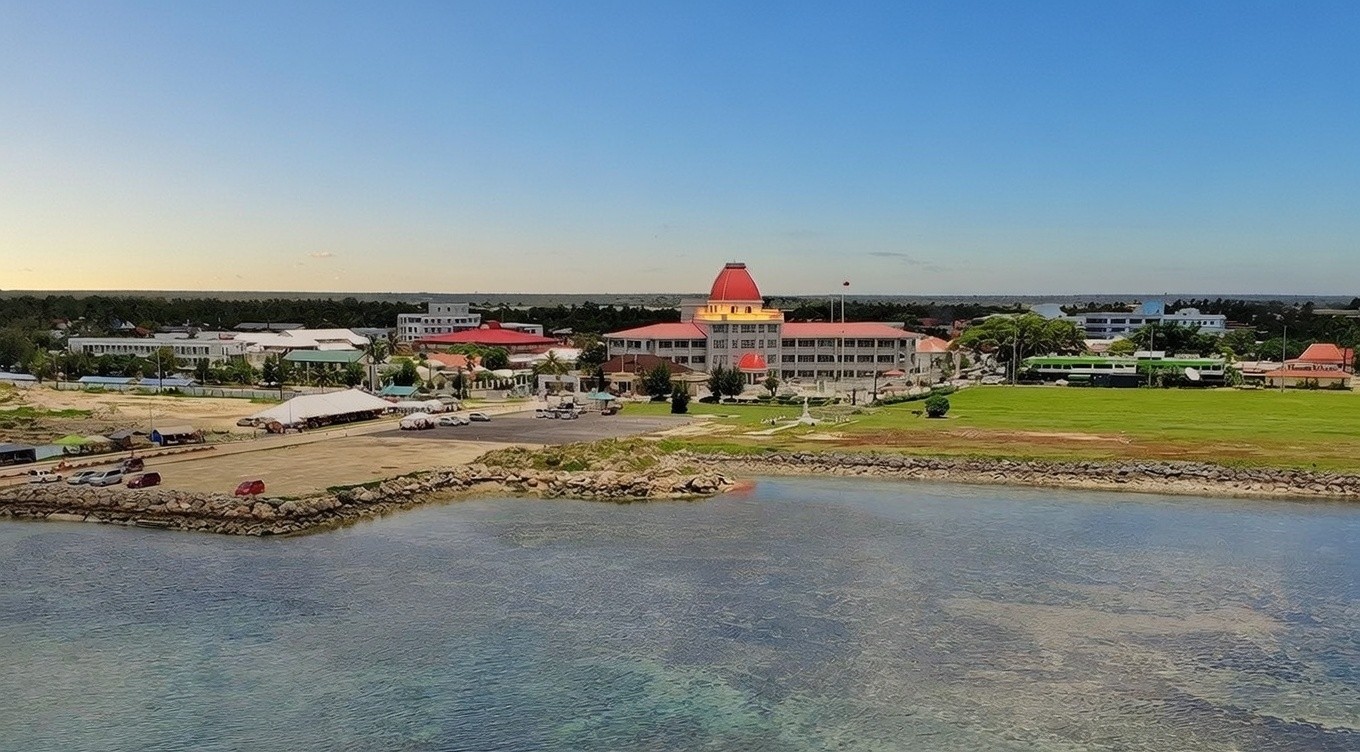
Kolomotuʻa, the old town of the Tuʻi Kanokupolu, lies west of the palace grounds. Kolofoʻou, the newer district beginning at Vahaʻakolo Road, took the Royal Palace and the ministries with it. Maʻufanga continues along the shore under the Fakafanua estate. The port administration keeps its offices there.
Trading at Talamahu Market on Sālote Road begins at dawn, six mornings a week. Growers from the Tongatapu villages bring in taro and yam by pickup, while the upper floor sells tapa cloth and pandanus weaving to buyers from the diaspora. The building must stay shut on Sunday, as the constitution reserves the Sabbath.
The stalls belong to families, and the stock behind them, to relatives in Auckland and Sydney. Remittances of that kind underpin our family trading and retail enterprises casework, along with the quarantine paperwork attached to a taro consignment on its way out of the kingdom. A wholesaler in Sydney answers to the terminology of the receiving inspector, never to the phrasing of the grower.
The International Wharf at Nukuʻalofa Harbour
There are two approaches into Nukuʻalofa harbour, cut through fringing reef: a northern channel for vessels of full draught and a narrower eastern one for hulls under 110 metres. Pilotage is available daily apart from Sunday. The beacons on the reef edge take their power from the sun, their arrays tended by the marine division.
Queen Sālote International Wharf, the only international port of the kingdom, has multi-purpose berths for containers and roll-on traffic, with a container yard and one roofed warehouse behind them. Ports Authority Tonga administers the facility. Between 2023 and 2025 contractors rebuilt the berths and raised them against storm surge for the Ministry of Infrastructure, with co-financing from the Australian Infrastructure Financing Facility for the Pacific.
It is through this quay that the fuel and the rice come in. A deficiency notice raised during a port-state control inspection may be actionable within hours, which leaves no interval for a second version drafted at leisure. Our merchant crew and port-state control teams turn such notices around against the vessel departure. The seafarer papers follow inside the hour.
The Fibre Station at Sopu
At Sopu, on the western shore of Kolomotuʻa, the fibre from Fiji comes ashore. The Tonga Cable spans 827 kilometres to Suva and has been in service since 2013. Through Tonga Cable Limited, ownership rests with the state. A domestic spur continues north to Pangai in Haʻapai and Neiafu in Vavaʻu.
When the Hunga Tonga-Hunga Haʻapai volcano erupted in January 2022, it did sever the international leg and the domestic spur at once. Engineers restored the Fiji connection within five weeks. Until 2023 the northern islands stayed dark, the replacement manufactured in France and shipped south. An earlier break in 2019 had already put the kingdom offline for close to a fortnight.
To conduct banking and consular business over one fibre path is a permanent exposure. Outage bulletins and the regulatory filings behind them belong to our subsea cable systems service line. One wrong term for a restoration window multiplies across the villages on the spur. Bulletins go out in two languages on the hour of issue.
Battery Storage at Popua Power Station
On the seaward edge of Nukuʻalofa at Popua, Tonga Power maintains a lithium-ion installation sized for grid stability, twinned with a longer-duration system at Matatoa in Tofoa. The two are deliverables of the Tonga Renewable Energy Project, financed by the Asian Development Bank alongside the Green Climate Fund.
In the days following the 2022 eruption, it was the storage at Popua that kept Tongatapu off a full blackout while ash fouled generation. Solar output banked in daylight returns to the network at the evening peak, which admits more renewable capacity to a grid of this size than the diesel sets would tolerate alone.
Capital of this order arrives with a documentary tail: grid-code amendments and drawdown reporting to the funders. With no Tongan precedent for the vocabulary, terminology decisions taken once here propagate through our renewable energy files. The switching notice arrives at Popua doors in Lea Faka-Tonga, printed alongside the tariff table.
Civil Records and Seasonal Labour Abroad
Recruiting for the seasonal labour schemes of Aotearoa and Australia, employers draw on the Tongatapu villages inland from the capital. Remittances from those postings underwrite a large share of the domestic economy, from school fees to church obligations. In Nukuʻalofa the enduring requirement is documentary: a birth entry or a police clearance must satisfy an officer in Wellington or Canberra.
Back to Nukuʻalofa come the pension entitlements and the estates of Tongans who died in Auckland. Under the constitution of 1875 a Tongan man may claim a tax allotment of his own, an entitlement inherited by his eldest son. Who inherits that allotment is decided on those papers. A coroner’s file in English answers little of what an heir needs.
Because checklists change with the season while the underlying documents do not, the volatile detail lives on our immigration and labour mobility page. It falls to the translator to keep one convention on names for the receiving authority, since a Tongan name with a chiefly title attached can be entered four ways on four forms. What we hand over is the translated text and a note of the naming decisions, ready for the next form in the sequence.
Tongan Linguistic Matrix for Nukuʻalofa Hub

Huri Translations
Tel. +689 89 205 483
[email protected]
PO BOX 365 Maharepa
98728 Mo'orea
French Polynesia
N°TAHITI 876649


Social