Pacific Families Across the Truckee Meadows
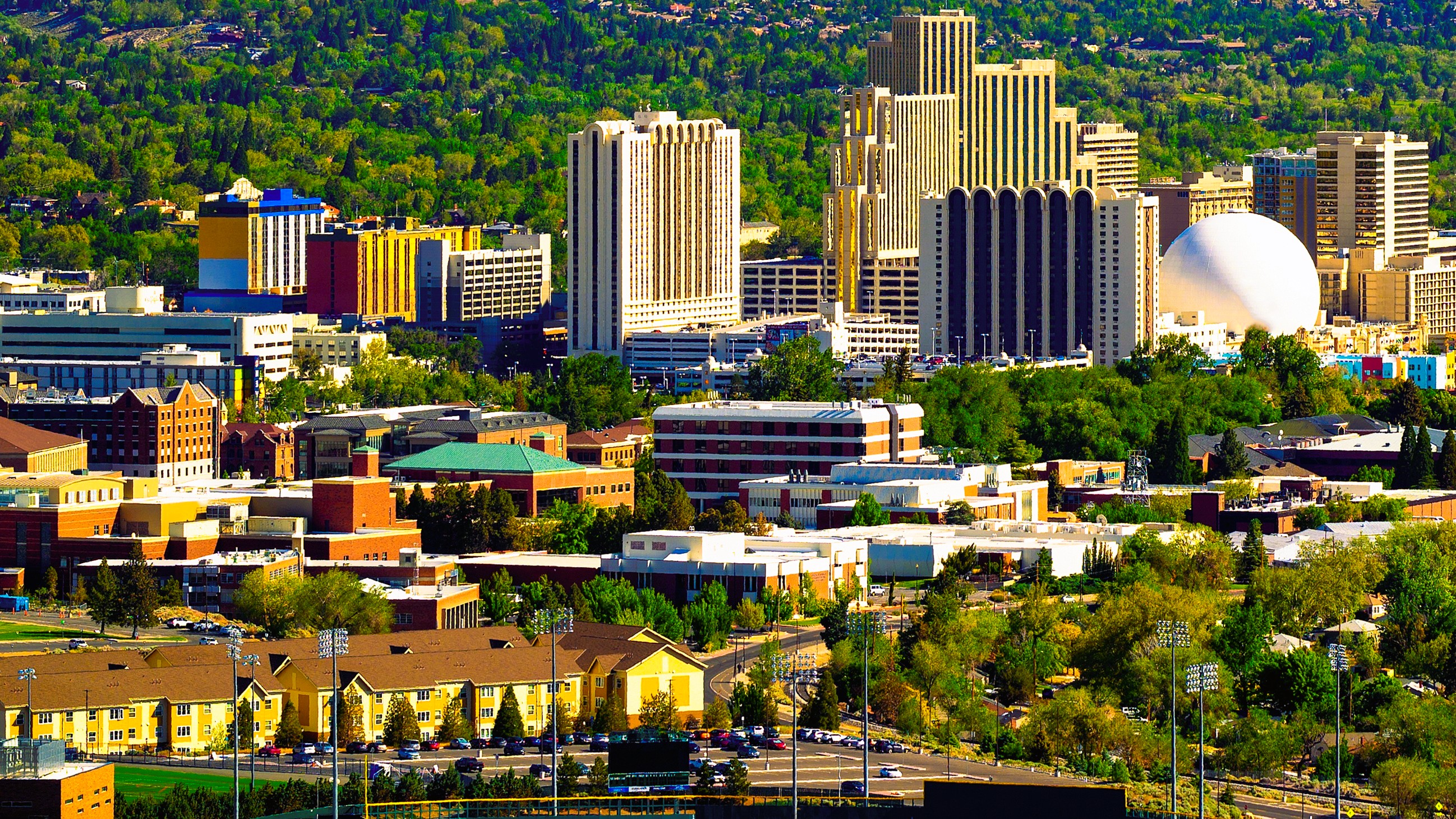
Flowing north out of Tahoe toward Pyramid Lake, the Truckee River cuts the valley beneath Reno and Sparks. Along it Pacific families have made their homes, from Sun Valley and Spanish Springs out to Wadsworth at the reservation line. Freight employment east of Sparks draws Samoan and Hawaiian speakers onto graveyard rotations and into forklift drills. Printed instruction for that trade opens most of our Nevada files, ahead of any hotel or courtroom request. Untranslated, the instruction leaves a crew member filling the gap by ear. One wrong verb on a lockout notice ends in an incident report.
Along Virginia Street, the casino hotels employ a second Polynesian contingent, their kitchen and housekeeping teams drawn from island communities across the county. Chemical labels in a linen room and handover notes at a front counter arrive in one language only. Leaning on a bilingual supervisor who interprets from memory, the team gets through the rotation. Our accommodation and lodging pages lift that duty off the supervisor, echoing the property’s own phrasing in Gagana Sāmoa and ʻŌlelo Hawaiʻi. Once agreed for the chemical labels, the wording follows into training-video subtitles.
Two further Huri nodes lie within a day’s haul of the city: Las Vegas to the southeast and Sacramento over the Sierra. Wording proved on a Sparks loading dock therefore transfers west without a fresh glossary. Since the jobs pull family questions along with them, from remittance forms to consular appointments, the volatile detail belongs in our orientation and remittance guidance instead of on a city page. That page changes whenever a scheme changes. This one does not.
The Interpreter Sarah Winnemucca
Sarah Winnemucca, born Thocmetony to the Northern Paiute in 1844, made her living as an interpreter between her people and the United States Army. From Pyramid Lake down to the meadow, Washoe County was her ground. Her 1883 account, Life Among the Piutes, was the first book published by a Native American woman. Written in the language of the government confining her people, it argued their case in that government’s own vocabulary. Three years afterward she opened a school near Lovelock, teaching Paiute pupils in their first tongue with English set beside it.
In 2005 Nevada gave the National Statuary Hall Collection her likeness, a second figure for the state in that gallery. What she practiced at the treaty table, one people’s words weighed against another people’s statute, is what our court interpretation and hearing transcripts handle for Washoe County families today. Her classroom argument survives in ʻŌlelo Hawaiʻi localization and Gagana Sāmoa localization, the pair of them feeding a wider language revitalization practice. The Capitol keeps the fuller account of the Winnemucca statue.
A Diaspora Archive at the University
Because Basque herders came into the high desert in numbers after 1900, the University of Nevada, Reno built a library around their language. Gathering holdings and printed matter for Basque communities across North America, the Jon Bilbao Basque Library became an institutional wager on a minority tongue with few fluent speakers left in the state. A diaspora’s memory universities seldom fund. This one did. Cataloged and public, the shelves have outlasted the sheep camps by a century.
Keeping a diaspora language legible across three generations takes an archive and a standard. In the meadow, Pacific parents are facing identical arithmetic: fluent grandparents, English-schooled grandchildren. Our Reno terminology files apply the discipline of that shelf, with locked spellings and a date against the entry. Even so, such a list ages well only if a linguist revisits it to catch the drift. To date one entry costs ten seconds. The classroom material built for county schools comes out of that method, filed the way the Jon Bilbao collection files Euskara. The school and curriculum pages hold the detail.
Shake Tables on the Engineering Campus
Across the campus from that archive, the Earthquake Engineering Laboratory drives full-scale bridge columns over biaxial shake tables, a laminar soil box alongside them for soil-structure testing. Directing the program, the Center for Civil Engineering Earthquake Research sends test reports to bridge owners and code committees well outside Nevada, in a technical dialect absent from ordinary dictionaries. On camera, a column fails. The failure then acquires a name, which is what a translator inherits.
It falls to a translator to pin such vocabulary down once it crosses an ocean. Engineers call one such connection a shear key, and the next, base isolation. Nothing gets invented mid-file: a term without a Samoan precedent stays as written, glossed once at first appearance. For a Samoan crew our preparedness handouts borrow the laboratory’s terms, with island equivalents laid in a second column. Either engineer, desert end or island end, can check the drawing against the original report.
Faults cross the valley itself, a fact behind the decision to raise the tables here. A shake table does not model a wave. There is no ocean in the building. Island building stock meanwhile takes the hazard by water as much as by tremor, though the retrofit drawing hardly alters between the two cases. While translating one, a linguist finds a bolt under two standards. Our adaptation infrastructure pages retain the overlap, provided the units survive the crossing intact. Capacities per table appear in the facilities record at the earthquake research center.
Polynesian Linguistic Matrix for Reno Hub
Huri Translations
Tel. +689 89 205 483
[email protected]
PO BOX 365 Maharepa
98728 Mo'orea
French Polynesia
N°TAHITI 876649


Social