Samoan Arrival in the Upper Midwest
There is a Samoan presence in Minnesota dating to the middle of the twentieth century, arriving through military postings and church networks into a state whose migration story belongs to Scandinavians and Hmong newcomers. Hennepin and Ramsey counties hold the larger part of that population still, a concentration visible in school enrollment figures and in hospital intake data. Against Utah or California the totals stay modest. A Samoan speaker at a Minneapolis service counter finds fewer bilingual staff than a cousin in Salt Lake City would. The shortfall surfaces in writing sooner than in speech.
In-language staff being scarce, interpretation falls to the bilingual teenager in the family, an arrangement under attack from Minnesota health systems for two decades. It is print that closes part of the gap: a consent form or a benefits letter in Gagana Sāmoa does not hinge on whoever is in the room. Those pages go out from us to county programs and clinic networks across the metro, coordinated with our Oakland node for families who keep one foot in the Bay Area.
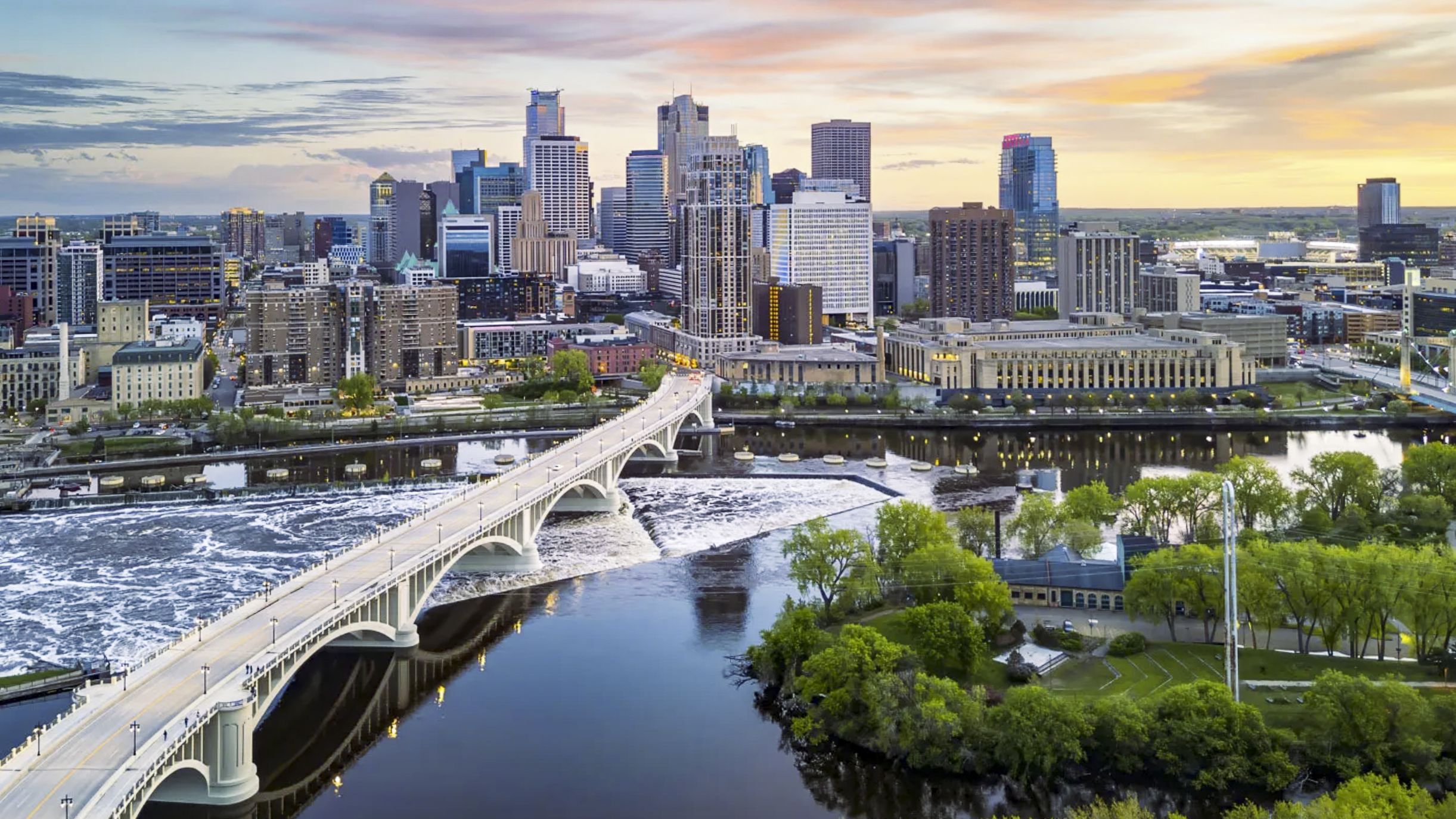
Bde Maka Ska and the First Dakota Alphabet
On the western edge of Minneapolis lies the city’s largest lake, Bde Maka Ska in Dakota, White Earth Lake in English. A United States Army survey party wrote John C. Calhoun onto that water in the 1820s, honoring a Secretary of War remembered for his defense of slavery and for Indian removal. In 2018 state and federal authorities reversed the choice. The Minnesota Supreme Court upheld the Dakota name in May 2020, closing a five-year legal fight over who may rename a body of water.
A Dakota village occupied the eastern shore through the 1830s under Maḣpiya Wicaṡṭa, or Cloud Man. Learning that language from his neighbors gave Samuel Pond and his brother Gideon the first alphabet for writing Dakota in 1834, along with a dictionary still consulted by teachers. The Pond brothers, devout and unsparing toward Dakota custom, aimed at conversion. An orthography drafted on that shore and a title restored by a supreme court raise one question: who spells a language. Whether the answer turns on macron placement or on the cultural and intellectual property terms around a community’s vocabulary, our language revitalization practice picks up its modern form. The park page for Bde Maka Ska tracks the whole reversal.
The Language School at Camp Savage
While the exclusion orders of 1942 were emptying the West Coast of Japanese American residents, the Army pushed its Japanese language school out of California. Minnesota alone among the midwestern states accepted it, initially at Camp Savage on 132 acres southwest of Minneapolis, then at Fort Snelling from August 1944. Across four years more than 6,000 linguists graduated, several hundred recruited from Hawaiʻi and many from the camps confining their own relatives. Graduates interrogated prisoners throughout the Pacific theater and translated captured documents, then interpreted at the postwar tribunals.
Postwar, that school handed the Defense Language Institute its model. Its Minnesota years remain the largest Japanese translation effort ever mounted in the state. Capacity of the kind must be assembled only through teaching and testing, decades ahead of the emergency calling on it. Our own professional training curricula and terminology lists go out well in advance of an opening deadline. Term by term, the Minnesota Historical Society encyclopedia documents the classes.
Esera Tuaolo and the Samoan Record in Minnesota
Born in Honolulu in 1968 to a Samoan banana-farming family in Waimānalo, Esera Tuaolo played defensive tackle for the Minnesota Vikings from 1992 to 1996, sixty games in purple. Gagana Sāmoa was the language of his childhood home, English the language of the locker room. He has lived in Minneapolis since leaving the field in 1999. His 2006 memoir made him one of the earliest National Football League players to speak openly about being gay, a book that put a Samoan American voice into diaspora publishing well ahead of the current wave.
Samoan children in the Twin Cities grew up across two generations with a Samoan surname on a Vikings jersey. At 200 tackles and 12 sacks the playing record is fixed, closed out by a Super Bowl appearance with Atlanta in 1999. Diacritics of the kind arrive in our files constantly, the macron in Sāmoa and in Waimānalo among them. It falls to us to set those marks correctly across sport and competition material and in the Samoan translation behind broadcast captions. The encyclopedia entry on Tuaolo fills in the rest.
A State Planetarium on the Saint Paul Campus
Minnesota’s official natural history museum spent eighty years on the Minneapolis campus of the University of Minnesota until a $79 million building on the Saint Paul campus replaced it in 2018, funded jointly by the state with private gifts. Though rebuilt on new ground, the collection has belonged to the university under statute since 1872, which puts it outside the mercy of a funding cycle. The Whitney and Elizabeth MacMillan Planetarium at its center seats 120 under a digital dome.
Under a dome of that scale, the star paths of Pacific voyaging become teachable to a classroom in Minneapolis. To teach Hōkūleʻa and the revival of instrument-free sailing means setting Hawaiian and Samoan star names in the spelling used by their own speakers. That wording goes into wayfinding and curriculum material and into the cultural education programs alongside it. Without noticing, a caption editor drops an ʻokina. In proofing we catch it. Building details and the viewing schedule are published by the Bell Museum.
Clinic Paperwork and County Notices
Minnesota hospitals and county departments must publish vital documents in the languages of their patients under federal funding conditions, a duty set out on our regulatory compliance page. In this state covered-language schedules stop at Spanish and Hmong, with Somali close behind. Consequently, a Samoan-speaking parent holds an English discharge sheet and a telephone interpreter number.
Huri Translations fills that gap for medical documentation and for public health notices, from immunization schedules to winter emergency instructions, alongside the enrollment packets and disciplinary letters issued under public sector operations. Clients should know that we do not issue certified copies of anything. What arrives from us is the translated wording itself, formatted for a county department to print under its own letterhead.

Huri Translations
Tel. +689 89 205 483
[email protected]
PO BOX 365 Maharepa
98728 Mo'orea
French Polynesia
N°TAHITI 876649


Social