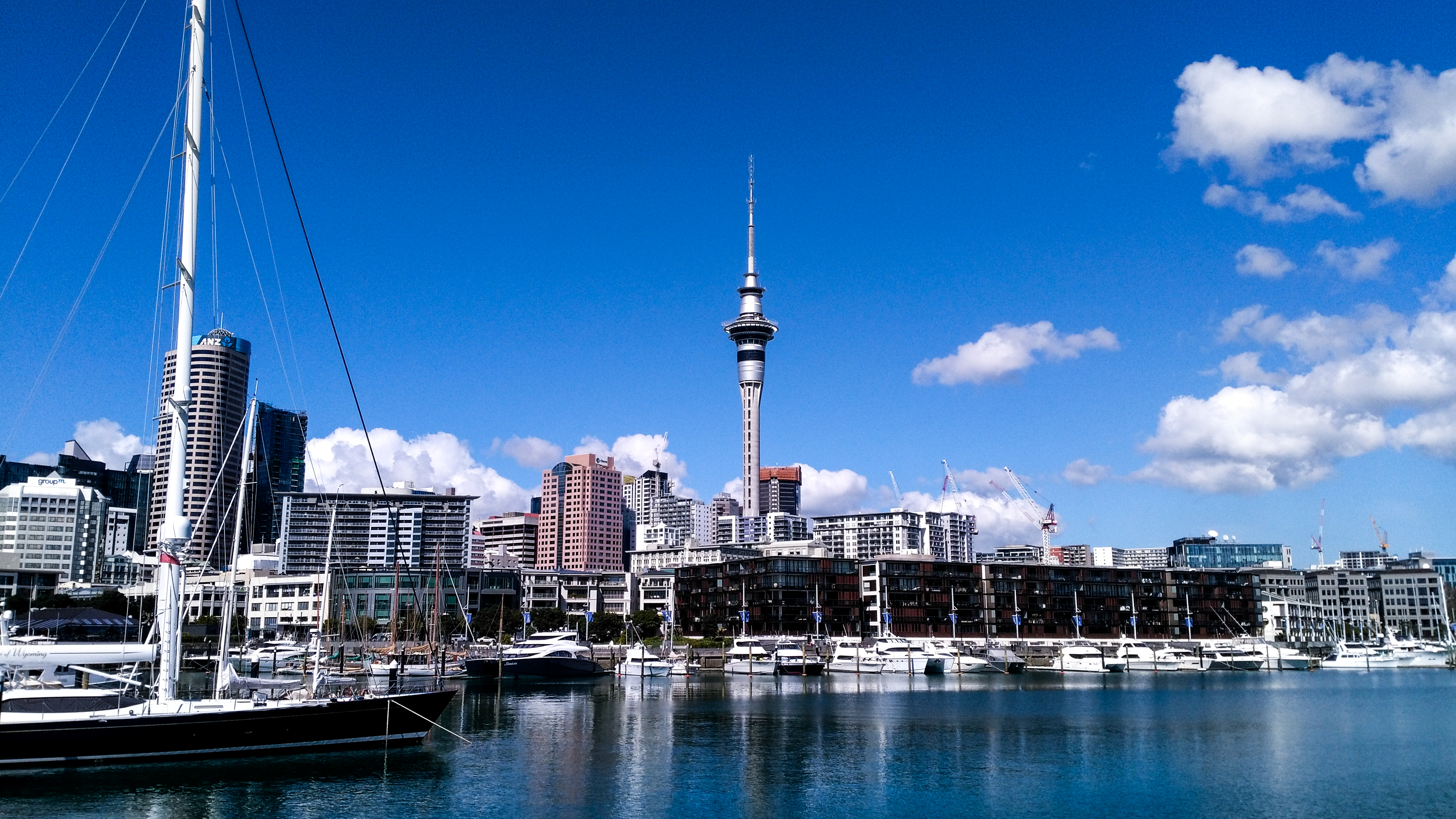
Crown and Iwi Translation in Tāmaki Makaurau
As the commercial heartbeat of New Zealand, Auckland generates substantial demand for specialised translation upholding the mana of Te Reo Māori. Huri Translations answers that demand with high-fidelity linguistic solutions for exchanges between Crown agencies and Iwi organisations. Our native translators support entities handling sensitive Treaty of Waitangi settlements and the bilingual public notices issued alongside them.
Because Te Reo Māori uses specific phraseology and protocols rooted in Tikanga, our translators handle official documents and legal submissions to the highest professional standard. Localisation here asks for more than word substitution, with cultural context shaping our terminology for statutes and public notices. The Waitangi Tribunal casebook alone shows how much rests on the wording of one disputed clause.
For Crown communications, we localise identical content into English and Te Reo Māori, keeping the two versions in step for government agencies. Local bodies across the region turn to us for bylaws and resource-consent notices bound for Māori-speaking whānau. The style ranges from a formal parliamentary tone to plain community language according to the audience.
Cook Islands Māori Across South Auckland
Our practice supports the Cook Islands community with health resources and educational materials translated into Rarotongan and English, giving whānau equitable access to essential information. Without the overhead of a physical office, our fully online model gives Auckland organisations rapid access to Polynesian language experts. Ōtara and Māngere count among the largest Cook Islands communities outside Rarotonga itself. By the last census, Pacific peoples made up more than one in six Aucklanders, a share unmatched by any other New Zealand city.
Within the technology sector, we also fine-tune Large Language Models to accommodate the indigenous languages of the South Pacific. The result is Auckland language data representative of the dialects spoken across the isthmus. Since Cook Islands Māori shows dialectal variation from island to island, a Rarotongan gloss will not always suit a speaker whose people descend from Aitutaki or Mangaia.
Health providers and schools generate the most constant flow of requests, from immunisation leaflets to enrolment forms sent home in the family’s first language. A parent signing a consent form needs the plain meaning behind the words. We deliver those files through the certified pipeline built for our immigration and labour-mobility clients and their seasonal contracts.
The Kāwharu Legacy in Ōrākei
Sir Hugh Kāwharu led Ngāti Whātua o Ōrākei as their paramount chief through the decades when Tāmaki Makaurau reckoned with the transactions of its founding. A scholar in Te Reo Māori and an anthropologist by training, he produced the English translation of the Māori Treaty text later cited by courts and the Waitangi Tribunal. His life joined the marae and the university, the ground beneath our legal and government and indigenous rights practice.
That translation still frames how the two texts of 1840 are argued, because a claimant’s case can turn on whether kāwanatanga meant governance or sovereignty. That very question is the daily material of our Te Reo Māori localisation specialists, who match a colonial-era clause to its modern legal equivalent. Ngāti Whātua o Ōrākei still use his name on the ground reclaimed by his people at Takaparawhau.
Heritage documents of this kind, the whakapapa of a claim and the wording of a deed, form a constant line of instruction for our archivists. We translate the historic Māori text beside its English version, for an iwi researcher to cite either with confidence. The care he modelled, one contested term weighed against a century of consequence, sets the standard for our Auckland practice. A fuller account of his scholarship appears in the biographical entry.
Shared Eastern Polynesian Descent
Māori and Cook Islands Māori grew from one branch of Eastern Polynesian voyaging, brought south across a shared ocean tradition. Linguists place Rarotongan and Te Reo Māori within one close subgroup, near enough that a fluent speaker of one grasps much of the other on the page. That kinship explains why Huri pairs the two languages on one Auckland team, wired to a common linguistic root. The shared root goes deep enough that nineteenth-century missionaries printed scripture in one tongue and found it half-legible to readers of the other.
The migration traditions of these peoples name a homeland called Hawaiki and a fleet of waka making landfall on new coasts. Auckland lies at the meeting point of that story, the port at which twentieth-century Cook Islanders arrived to join tangata whenua already established on these shores. Our cross-border and diaspora legal casework opens with these genealogies, because a title claim or a repatriation request rests on demonstrated descent.
Shared descent does not erase difference. A Māori kupu and its Rarotongan cousin can diverge in meaning after centuries apart. A translator who misses the drift can distort a whakapapa. Our linguists track the two lines in parallel, checked against the archival evidence and delivered in the reo of a family’s own island.
Waitematā Harbour and the Ports of Auckland
The Waitematā Harbour opens Auckland to the sea lanes of the South Pacific, its container terminals handling a large share of New Zealand’s imported freight. The Ports of Auckland receive vessels from across Polynesia and Asia, arrivals bringing a paper record of manifests and customs declarations. That paperwork crosses languages ahead of clearance at the wharf. Active on this shoreline since the nineteenth century, the port stays the cargo gate for the upper North Island.
Commerce between the islands and the mainland turns on correct phrasing, because a mislabelled export certificate can strand a shipment in port. We localise shipping and compliance documents for the international trade flowing through the terminals, from freight forwarders to island exporters shipping produce and marine catch. A customs officer and a Rarotongan grower need identical figures on one form, present in two languages with nothing lost between them.
The Waitematā also ties Auckland into the wider network linking Sydney and Suva, our nearest hubs across the Tasman and the Pacific. When a vessel calling here continues to those wharves, a bill of lading localised in Auckland stays valid down the chain. The freight figures behind that traffic are set out in the Ports of Auckland profile.
The Central Interceptor Beneath the Isthmus
Beneath the isthmus, Watercare has driven the Central Interceptor, a wastewater tunnel of roughly sixteen kilometres built to shut overflows out of the Waitematā for the next century. The asset belongs to a council-owned utility, funded on a scale fixing it in the city’s infrastructure for generations. Its purpose is cleaner water in the harbour behind so much of Auckland’s Pacific shipping, the tideway first travelled by waka.
A project of this depth generates its own library of technical language, from geotechnical reports to community advisories issued in the languages of the neighbourhoods above the route. Māngere and Onehunga lie along the alignment, districts with large Pacific populations. We localise the climate-adaptation notices sent to those residents, with the engineering under their streets explained in the reo of the home.
Because water and climate resilience will define Pacific-facing cities for the rest of the century, the wording set down today becomes the reference for the next generation of engineers. Huri maintains that archive in English alongside Te Reo Māori and Rarotongan, built to survive the handover from one project team to the next. A full engineering account of the tunnel appears at the Central Interceptor reference.
Māori & Pasifika Linguistic Matrix for Auckland Hub

Huri Translations
Tel. +689 89 205 483
[email protected]
PO BOX 365 Maharepa
98728 Mo'orea
French Polynesia
N°TAHITI 876649


Social