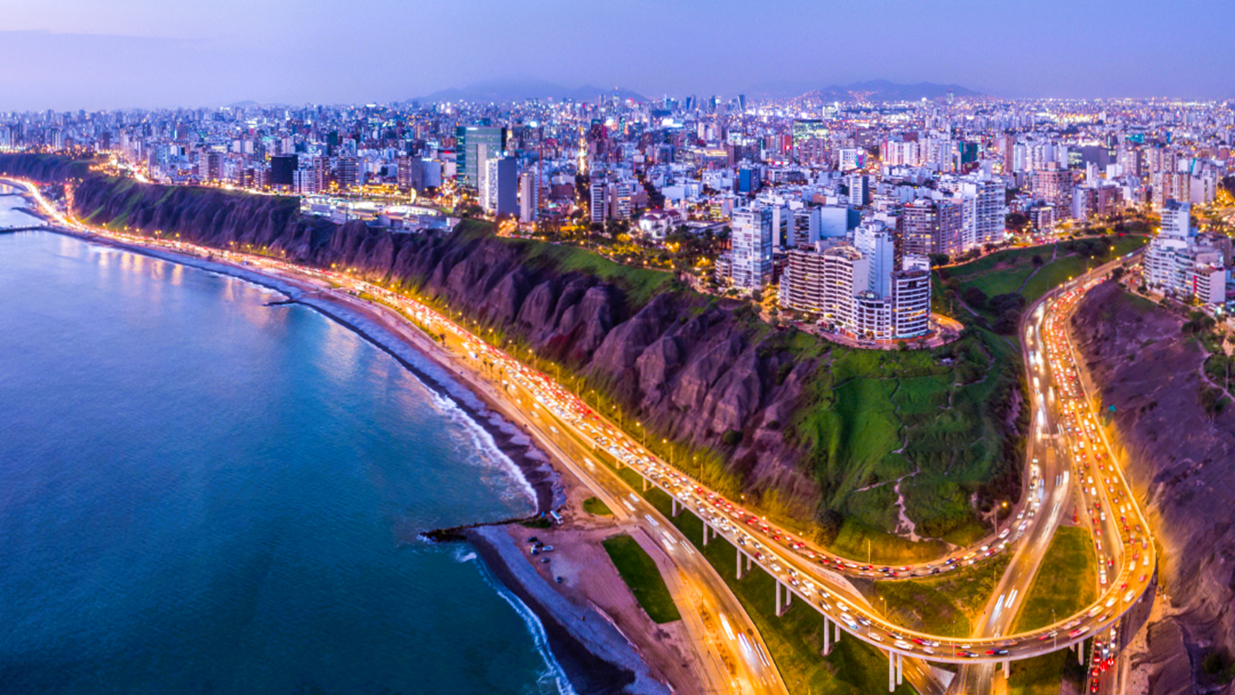
Torre Tagle and the Oceania File
Since 1918 the Peruvian state has owned the Palacio de Torre Tagle, an eighteenth-century mansion in central Lima given over to the foreign ministry and keeping its ceremonial and protocol function. The Pacific Alliance, founded in 2012 by Perú with three other Latin American economies, faces the Asia-Pacific market. Papers on trade facilitation and the blue economy leave Lima in Spanish, then arrive at the Forum Secretariat in Suva in English. For the protocols themselves, the bilingual versions belong to our international trade files.
Alongside the multilateral flow, the bilateral line towards Australia and New Zealand produces cooperation memoranda in two languages. Under the South-South track, dossiers going to island governments need Spanish drafting checked against an English original, since the legal effect belongs to the signed version. Huri Translations drafts the paired texts and the ministerial notices behind them, listed under government notices. Construction and restoration are documented in the Palacio de Torre Tagle article.
The Callao Quays and Customs Compliance
Founded on the roadstead below Lima, Callao remains the Peruvian Pacific harbour, with container volumes for the whole country concentrated on its quays. Vessels bound for Oceania load there for the island wharves and the Asian hubs across the ocean. Bills of lading and port-state inspection files arrive in Spanish, then leave in English, a daily volume inside our maritime operations service.
SUNAT, the Peruvian customs administration, certifies authorised economic operators under a programme studied by the Oceania Customs Organisation for its own trusted trader network. Between administrations, mutual recognition arrangements give the Spanish text and the English text equal standing, because a divergence in the definition of an operator suspends the benefit. Our team assembles the bilingual instruments and the annexes attached to them, logged against regulatory compliance. Port limits and district boundaries are set out in the Callao entry.
Isabel Barreto, Adelantada of the 1595 Voyage
On 9 April 1595 Isabel Barreto de Castro sailed from Callao with the Mendaña expedition, four ships and 378 people bound for the Solomon Islands. Her fleet made the first documented European landfall in the Marquesas that July, an encounter leaving some two hundred Islanders dead. After her husband died at Santa Cruz in October, the succession fell to her under his will, giving her the title of Adelantada and governor. Spanish was the language of her orders and of the account by her pilot Pedro Fernandes de Queirós, who brought the surviving ship into Manila without charts, the kind of dead reckoning described in our hydrography and pilotage files.
Her standing is contested: the crew accused her of hoarding stores during the crossing and of hangings aboard. In Galicia and in Perú, scholarship still argues the case. Her authority itself rested on notarial instruments, a will and a royal commission. Researchers ordering copies from the Lima archives need the Spanish-English pairing of them, prepared through our notarial documentation and apostille service, with the Spanish edited by our Spanish localization team. For the voyage and its aftermath, the Isabel Barreto biography gives the detail.
The Chancay Deep-Water Terminal
Seventy-eight kilometres north of Lima, the Chancay terminal gives the Peruvian coast a 17.8-metre draught, two metres deeper than Callao. Chinese state shipping capital built it with a Peruvian mining partner. For direct sailings to Asia, vessels of 18,000 containers berth there, without the transhipment step through northern hemisphere hubs. Copper and fresh produce filled the first cargoes out.
Fruit shipped through the terminal needs phytosanitary certificates in the language of the importing market, together with the Spanish original for SUNAT. Concession terms and berthing contracts are drawn in Spanish and English. Under contracts and agreements we supply the Spanish and English texts of those instruments, matching the export certification to phytosanitary and biosecurity protocols. For berth depths and cargo capacity, the figures are set out in the Port of Chancay listing.
The Humboldt Current and Eastern Pacific Tuna Science
Cold upwelling along the Peruvian coast feeds the anchoveta fishery, the biological base of the Eastern Pacific fishmeal industry. IMARPE, the state marine institute created in 1963 at Chucuito in Callao, surveys the stocks from research vessels and chairs the national El Niño committee. First in Spanish come the survey bulletins and the stock assessments. Their English versions go to the regional organisations setting catch limits, a load booked to ocean science and research.
Perú belongs to the Inter-American Tropical Tuna Commission, the body governing Eastern Pacific tuna from La Jolla in English and Spanish. Through joint sessions with the Western and Central Pacific Fisheries Commission, South Pacific albacore and bluefin reference points align across the boundary between the two convention areas. Observer reports and species identification guides therefore appear in Spanish and English, with Pacific-language glosses for dockside samplers. Under fisheries management and RFMO compliance, our linguists prepare that documentation. The survey series is published by the Peruvian marine institute.
The 1862 Labour Trade in the Lima Repositories
Between 1862 and 1864, ships fitted out at Callao took Islanders from Rapa Nui and from the atolls of Tongareva and Tokelau to the guano deposits of the Chincha Islands. Perú had abolished slavery in 1854. The deportations therefore proceeded under labour permits and sale notices written in Spanish. On Rapa Nui the raids removed the ariki and the chant keepers, severing the transmission of the rongorongo script.
In the Lima repositories and the national library, the Callao manifests survive with the parish records. Diaspora researchers from Rapa Nui and the Cook Islands consult them to trace lineage and to recover ancestral testimony. Finding aids in Spanish need Rapanui and Rarotongan equivalents for names garbled by nineteenth-century clerks. For research publications, Huri Translations transcribes the manifest hands and builds the bilingual aids.
In 1863 a repatriation returned a handful of survivors, bringing smallpox with them and a second mortality on the islands. Rapa Nui and Cook Islands institutions still pursue the documentary side as a matter of historical redress. Statements prepared for that process come under truth and reconciliation. From Lima our assignments pair with the Rapa Nui node at Hangaroa for language documentation and with Suva for the secretariat traffic. The standard account of these voyages is the Maude study in the Australian National University repository.
Pacific Alliance and Polynesian Archive Linguistic Matrix for Lima Hub

Huri Translations
Tel. +689 89 205 483
[email protected]
PO BOX 365 Maharepa
98728 Mo'orea
French Polynesia
N°TAHITI 876649


Social