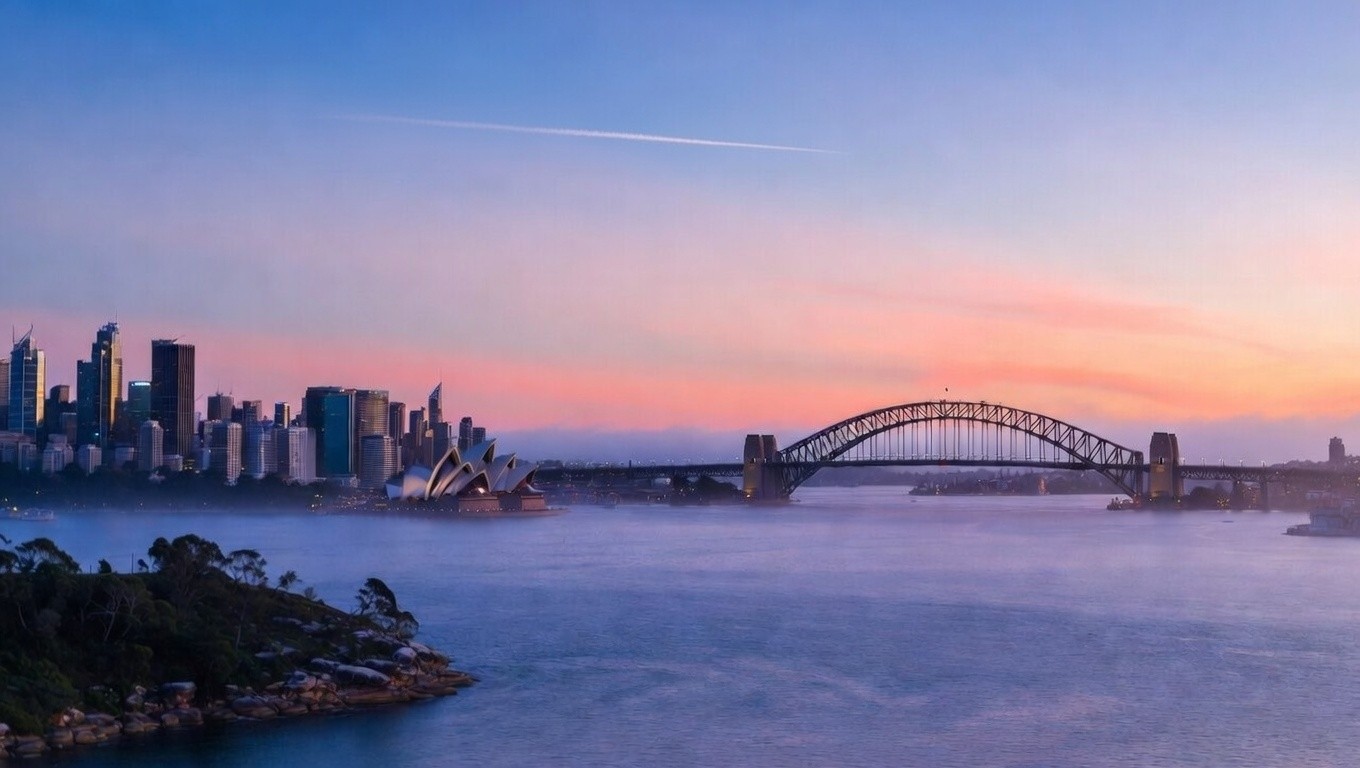
The Pacific Suburbs of Western and South-Western Sydney
Blacktown and Campbelltown contain the largest Samoan and Tongan populations in New South Wales, with Liverpool and Fairfield close behind. Sunday services in Bidwill and Busby proceed in Gagana Sāmoa and lea faka-Tonga. State agencies post rental notices and school enrolment forms to those addresses in English. A grandmother fluent in Tongan and a grandson schooled here will give two accounts of one letter. The English original governs.
Fijian congregations gather at Enmore in the inner suburbs, with a Cook Islands congregation at Croydon Park. That ring is older and smaller than the estates of the west. It grew out of nursing and hospitality employment rather than the factory floors further out. Rail between the two rings takes the better part of an hour, which is why a Samoan client in Minto rarely shares an interpreter with a Fijian client in Marrickville. Sydney’s spread differs from the Queensland pattern. Our Brisbane and Melbourne pages treat that difference separately.
Huri prepares the papers generated in volume by these two rings, tenancy applications and apprenticeship agreements among them. Family law files raise a harder problem: a Tongan title of respect has no English equivalent. A translator who drops it lowers the rank of the person named. Our cross-border and diaspora legal matters section sets out the reconciliation of the two systems. A Huri reviewer then checks the finished draft against the Tongan source.
Barangaroo and the Return of an Eora Name to the Waterfront
On the western edge of the city centre, twenty-two hectares of former wharf ground bear the name of Barangaroo, a Cammeraygal fisherwoman of the Eora nation who broke her husband’s fishing spear in 1790 over his dealings with the colony. New South Wales ended cargo handling at Sydney Harbour in 2003. The ships went south to Botany Bay. The wharf label East Darling Harbour lapsed with the cargo. Barangaroo herself died in 1791. Bennelong scattered her ashes in the governor’s garden at Sydney Cove.
To name a business quarter after an Eora woman is to put an Aboriginal word into title deeds and leases. Spelling then acquires statutory weight. A misprinted clan name in a heritage deed weakens the instrument. Pacific languages present the identical hazard in the okina and the macron. Our cultural and intellectual property material details the handling of proper nouns taken from an oral tradition.
It is the office towers at the southern end of the quarter that hold the mining financiers and fund managers with Pacific portfolios. Landowning clans in Fiji and Papua New Guinea receive the resulting tenement filings and benefit agreements in languages foreign to the drafters. Our mineral economics and finance chapter treats that drafting in depth. The precinct has been Barangaroo in law since October 2006. The encyclopaedic account of her life fixes that date.
Faith Bandler and the South Sea Islanders of Sydney
Born at Tumbulgum in 1918 to a father abducted from Ambrym in 1883, Faith Bandler made Sydney her base in the early 1950s and remained there for six decades. She co-founded the Aboriginal-Australian Fellowship with Pearl Gibbs in 1956 and directed the referendum campaign of 1967. Constitutional change of that order needs statutory drafting in plain terms. Our legislative materials entry treats that species of text.
Blackbirders seized her father Wacvie Mussingkon at Biap village on Ambrym and put him into the Queensland canefields at thirteen. Islanders there conduct public business in Bislama. A descendant tracing a Vanuatu ancestry through Australian archives needs that language. Bandler left the Aboriginal rights campaign for her own people in 1974 and pressed her case until the Commonwealth acknowledged Australian South Sea Islanders as a group apart in 1994. Our truth and reconciliation pages handle the archival wording of that history.
Bandler wrote three books of her own, Wacvie in 1977 and Welou, My Brother in 1984, turning family testimony into print for readers shut out of the plantation ledgers. Our distribution and publishing terms describe the passage from spoken account to printed page. The national biography of Bandler gives the fuller life. Descendants on Ambrym still request translations of Australian birth and death records, a small trade in paper that keeps a broken lineage legible.
Crew Papers at the Port Botany Container Berths
There are three container terminals on the northern shore of Botany Bay. On-dock freight rail feeds them all. No other Australian port matches that on all of its quays. Sydney Harbour lost its stevedoring in the 2000s. The deep-water berths at Botany then took the container trade of New South Wales. Petroleum and gas come ashore at separate bulk liquid berths. Pilotage and vessel traffic for Botany Bay are directed from the port itself.
Filipino and Fijian seafarers are aboard a good share of the ships calling at Botany. A port-state control inspection may question hours of rest and wage accounts. An officer unable to follow the questioning in English answers by way of an interpreter, whose transcript then enters the inspection file. Our merchant crew and port-state control schedule lists the instruments needed by owners and their agents.
A detained ship costs its owner thousands of dollars a day. Translation of the crew agreement and the safety notice is therefore measured in hours. Once translated, the two are back with the master inside the day, with no intermediary in the chain. Huri supplies Fijian translation for that traffic. The port authority of New South Wales publishes the berth and channel data underlying them.
The Marine Research Institute at Chowder Bay
Sharing one laboratory among four universities gave the state its principal marine research facility in 2005. The Sydney Institute of Marine Science occupies former army buildings at Chowder Bay in Mosman under a lease from the Sydney Harbour Federation Trust, and draws seawater for its aquaria from the Heads. Macquarie University and the University of Technology Sydney are two of the four partners.
Its scientists study seagrass and crayweed restoration in an urban ocean. Lagoon managers in Fiji and Sāmoa face the identical problem. A restoration protocol written in English at Mosman becomes a handout in the islands. The biology must survive that passage intact. Our ocean science and research annex documents the terminology involved.
Village consultation in Fiji proceeds in Na Vosa Vaka-Viti, seldom in the English of the grant application. A proposal drafted at Mosman is useless to a clan until a translator has recast it. The institute at Chowder Bay streams real-time water quality data from the bay. Huri produces the Pacific-language versions of that class of monitoring report, the terminology fixed once in a glossary and applied down the whole series.
Sixty-Five Thousand Pasifika Objects at the Australian Museum
Although it opened as a colonial cabinet of curiosities in 1827, the Australian Museum has assembled some sixty-five thousand Pasifika objects far from the islands of their making. The gallery label states that Wansolmoana is Solomon Islands Pijin for one salt ocean. Most of those objects entered the collection via nineteenth-century mission stations and trading vessels. A Tongan club catalogued in 1880 has an English tag and a Tongan term spelled by ear.
It falls to curators to check those labels against the communities of origin. The catalogue reproduces only the collector’s own wording. A mishearing in 1880 will mislead the descendant who searches for that object a century later. Huri commissions Tongan translation of object titles and the provenance notes attached to them. Classroom versions of that catalogue belong under cultural education.
Repatriation adds a second task. When the museum returns ancestral remains to a Pacific island, the custodianship documents must satisfy two legal systems and two languages. The museum’s Pasifika programme publishes the community consultation preceding such a return. Delegations from Tonga and Vanuatu have taken part in it. Huri prepares the accompanying instruments in a glossing format, one line of Tongan set under one line of English.
Seasonal Employment Papers and Family Records in New South Wales
Through the harvest months, employees from Vanuatu and Tonga fill orchard and abattoir posts across regional New South Wales. Sydney is the arrival and departure point. Their contracts and deductions statements exist in English. An employee who signs an untranslated contract signs blind. The Australian programme behind those postings changes its rules under successive governments. Our PALM scheme sequence holds the current detail.
Family paperwork outlasts the picking season. A death in Nukuʻalofa obliges a Sydney relative to produce a Tongan record of it for a probate file. Australian databases do not store the macron in Sāmoa or the okina in Nukuʻalofa. Two rival spellings of a surname can delay an estate for months. Huri issues a name-equivalence note to reconcile them, though questions of orientation and remittances are treated on the immigration page itself.
Huri keeps no office in Sydney. Delivery is by network transfer, priced by the word. Our Fijian and Samoan linguists are native speakers with legal or maritime training. The reviewer on a Sydney job has already treated the equivalent instrument in Suva, and a colleague, the version for Apia.
Pacific Linguistic Matrix for Sydney Hub

Huri Translations
Tel. +689 89 205 483
[email protected]
PO BOX 365 Maharepa
98728 Mo'orea
French Polynesia
N°TAHITI 876649


Social