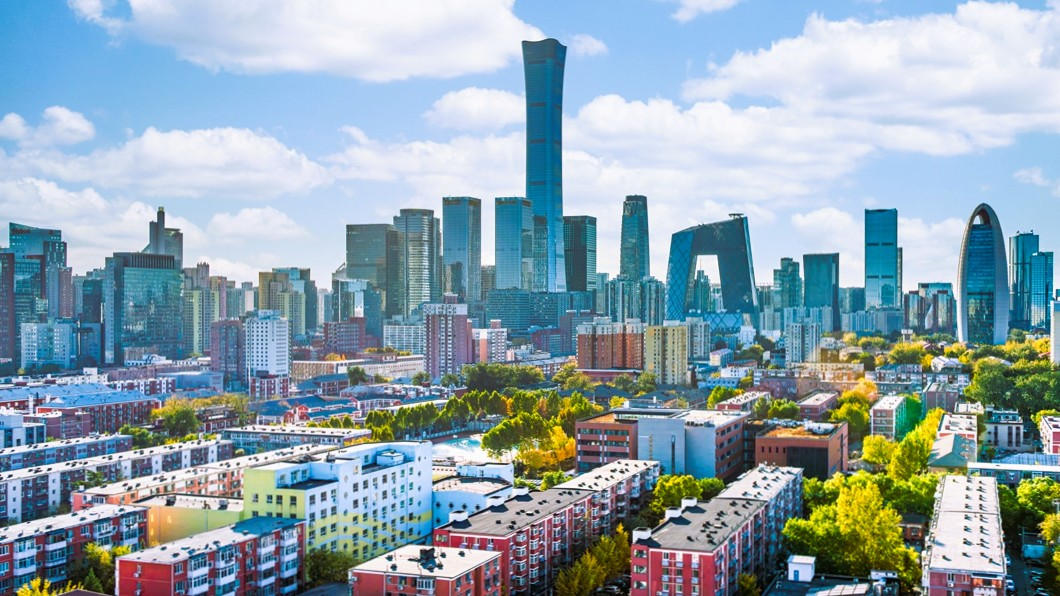
Pacific Missions Accredited to the Chinese State
Ten Pacific Island states keep resident or non-resident embassies in Beijing. Alongside them, the Pacific Islands Trade and Investment Commission maintains a posting in the city, promoting regional exports into the Chinese market. Several of those capitals, Honiara and Port Moresby among them, have upgraded their representation since 2019, the year Solomon Islands and Kiribati switched their recognition from Taipei to Beijing. Huri Translations assembles the credentials letters and the cooperation memoranda channelled through these missions, the drafts crossing from English and the Melanesian pidgins into the Chinese lodged with the receiving side.
When the China-Pacific Island Countries Foreign Ministers’ Meeting convenes at two-year intervals, the delegates align positions on climate finance and fisheries. The biennial mechanism has become a fixed feature of the diplomatic calendar, its paperwork recurring on a predictable cycle. Huri Translations produces the joint communiqués and the side-event programme documents tied to these gatherings, spanning the public-sector operations of the attending delegations and the protocol papers of the host ministry.
Past the treaty texts, the missions handle a quieter stream of consular business: passports for nationals living in China and the civil records of families split between the two jurisdictions. It falls to the sending states to keep these files legible in two orthographies, a duty our cross-border and diaspora legal support answers with certified bilingual copies. Student mobility adds a further seam, as young Pacific scholars on Chinese government awards need their transcripts and enrolment papers put into Chinese for the enrolling campuses.
The Translator Rewi Alley in Beijing
Rewi Alley, a New Zealand-born translator named after the Māori resistance leader Rewi Maniapoto, made Beijing his base from 1953 and lived there until his death in the city in 1987. Over sixty years in China he put thousands of Chinese poems into English, from Li Bai and Bai Juyi to the first English anthology of the country’s modern verse, printed in Beijing. His fifty-odd volumes joined the distribution and publishing practice our media team inherits, while the vocational schools he founded, later the Peili Institute and today Beijing Bailie University, underpin the professional training our education service tracks.
His name persists in Beijing through the university grown from those Bailie schools, with Chinese and New Zealand officials marking his anniversaries into the present decade. That endurance of a foreign translator inside Chinese civic life is the footing our heritage and archival service rests on, from bilingual name and title records to the cataloguing of correspondence held in national collections. The fuller record of his sixty years is kept in the New Zealand national biography maintained by the Ministry for Culture and Heritage.
Chinese Construction Contracts in Melanesia
Chinese state-owned enterprises have won construction contracts across Melanesia, from the National Stadium raised in Honiara for the 2023 Pacific Games to the road and port projects underway around Port Moresby and Lae. Negotiators draft the instruments in English and Mandarin. On location, the daily exchange happens in Tok Pisin or Solomon Islands Pijin. Huri Translations closes the distance between the signed contract terms and the crews whose villages border the construction footprint.
Because the projects touch customary tenure, the site inductions and the community consultation materials matter as much as the master agreement. The Melanesian end of that flow ties into our Honiara practice, with East Asian coordination handled from Hong Kong. It is the closest families that absorb the noise and the runoff. Huri Translations compiles the field summaries and the safety cards in the crews’ own pidgin.
Seabed-Minerals Science Seated in the Capital
Seated in Beijing, the China Ocean Mineral Resources Research and Development Association coordinates the country’s search across the deep Pacific floor. In three decades under the Ministry of Natural Resources, the body has become the Chinese contractor to the International Seabed Authority for the deep-sea mining of the Clarion-Clipperton Zone, a fracture zone of the north-eastern Pacific the size of a continent. Its first nodule contract there dates to 2001, the earliest of several licences granted to a Chinese applicant. Those blocks lie near the exclusive economic zones of Kiribati and the Cook Islands, states drafting their own seabed-minerals law.
The exploration cycle generates a paper trail the Pacific cannot ignore: environmental impact assessments and the benefit-sharing terms owed to developing states under the Law of the Sea. As the Authority drafts the Mining Code set to govern any future harvest, the affected islands press their claim to a share of the proceeds, their submissions crossing into the region’s languages ahead of the Kingston talks. To make sense of these dossiers, the island administrations need them in plain regional English, with the Chinese originals set in a legible parallel. Huri Translations supplies the Simplified Chinese versions of the technical submissions and the community-facing summaries tabled by the coastal states at the Authority’s annual sessions. The International Seabed Authority names the association among its public contractors.
Pacific-Sino Linguistic Matrix for Beijing Hub

Huri Translations
Tel. +689 89 205 483
[email protected]
PO BOX 365 Maharepa
98728 Mo'orea
French Polynesia
N°TAHITI 876649


Social