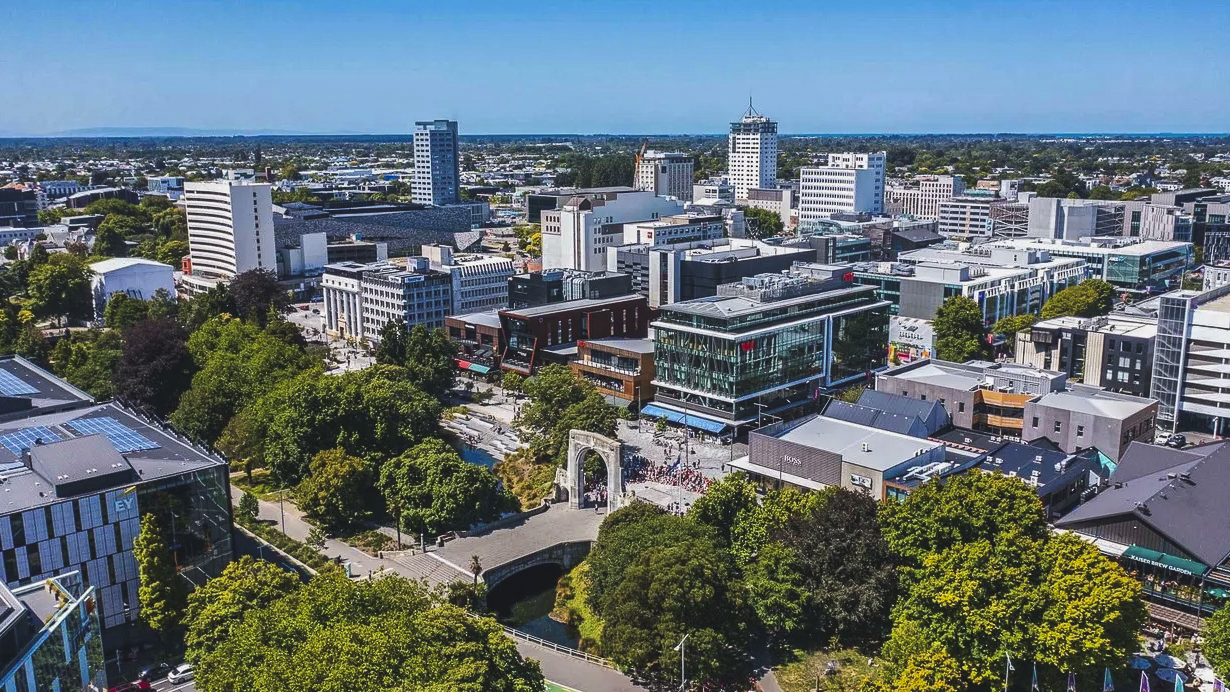
John Macmillan Brown and Pacific Learning at Canterbury
One of the founding professors of Canterbury College, John Macmillan Brown, taught classics and English literature prior to a term as Vice-Chancellor of the University of New Zealand. His voyages through the islands turned his attention to the Pacific peoples and to te reo Māori and its island relatives, a body of Pacific scholarship pursued into old age. His notes on Polynesian speech filled several published volumes. His later theories of how the ocean was peopled have since been set aside by the field, though the archive of languages he gathered continues to inform cultural and intellectual property research.
That name still marks Pacific study in the city: the Macmillan Brown Centre for Pacific Studies at the University of Canterbury, founded from his bequest, houses a research library and an artist residency. The Macmillan Brown Library counts Pacific manuscripts and early photographs among its holdings. Postgraduate scholars in Pacific studies draw on that collection for their theses. A public lecture series in his name brings a Pacific audience to the campus in winter. For those depositing Pacific-language material there, we prepare heritage transcriptions and the translation of names and titles, the archival record generated by a bequest of this kind. The centre documents its own founding at the Macmillan Brown Centre for Pacific Studies.
Pasifika Trades in the Canterbury Rebuild
Since the earthquakes, a reconstruction of the central city lasting more than a decade has drawn Sāmoan and Fijian tradespeople from around Aotearoa and from the islands themselves. These builders and labourers form a permanent part of the region’s construction sector. Their contracts govern pay and the conditions of a subcontract. Our team localises the site safety manuals and the employment agreements into Gagana Sāmoa and Fijian, giving a tradesperson the terms of his engagement in his own first language, a matter of regulatory compliance on any Canterbury site. Site inductions proceed in two languages on the larger projects.
With several thousand Pasifika residents within the territorial authority, the city’s hospitals and health services owe care in Pacific languages. Our clinical team prepares patient consent forms and medication instructions in Sāmoan. Its mental-health assessments assist the families of Hornby and Riccarton in their own language. Interpreters attend the antenatal and the discharge appointments for parents with little English.
Tongan ranks among the city’s larger Pacific languages. Our Tongan translators issue the consent and dosage forms for the homes of Linwood.
Te Whakaraupō and the Port at Lyttelton
Over the Port Hills from the central city lies Lyttelton, the principal deep-water port of the South Island and its historic point of Pacific arrival. A road tunnel joins the wharves to the city plain. Banks Peninsula rose from two lava craters, one of them drowned to form the inlet. Māori named these waters Te Whakaraupō, the harbour of the bulrush reeds.
Pacific seafarers form part of the crews aboard the container and cruise vessels calling at Lyttelton. Antarctic resupply gathers at the port ahead of the southern summer. For those crews, we translate the contracts and the safety notices of crew welfare and labour at sea. A port state owes those papers to any seafarer at its berths. The wharves are documented by the Lyttelton Port Company.
The Tāwhaki Aerospace Centre at Kaitorete
East of the city, on the twenty-five-kilometre spit of Kaitorete between Te Waihora and the Pacific, lies the Tāwhaki National Aerospace Centre. A commercial partnership of the Te Taumutu and Wairewa rūnanga with the Crown backs the centre, its name drawn from the Ngāi Tahu pūrākau of Tāwhaki, who climbed to the heavens for knowledge.
Aircraft testing and launch trials proceed from the runway, the flat coast giving open access to a wide band of orbits. The rūnanga pair that aerospace kaupapa with the restoration of the spit’s rare dune ecology. As mana whenua lead the venture, we localise its curriculum and wayfinding materials into te reo Māori, together with the Pacific languages of the students at its programmes. The joint venture sets out its aims at the Tāwhaki National Aerospace Centre.
Church Welfare and the Smaller Language Groups
Across Ōtautahi, the Pacific churches remain the centre of community and spiritual life. They take on welfare for the councils and the district boards of Canterbury. The parishes double as the venues for neighbourhood meetings with the local authority. Sunday worship in the heritage tongues renews them week to week among the young. In turn, our translators draft the pastoral notices and the public-health programmes delivered to the congregations.
Larger agencies rarely supply the smaller island tongues. Through our online platform, church coordinators draw on Niuean and Tokelauan translators at short notice. Our South Island practice joins the wider network at our Auckland and Wellington hubs, the two North Island nodes of our Pasifika service.
Pacific Linguistic Matrix for Christchurch Hub

Huri Translations
Tel. +689 89 205 483
[email protected]
PO BOX 365 Maharepa
98728 Mo'orea
French Polynesia
N°TAHITI 876649


Social