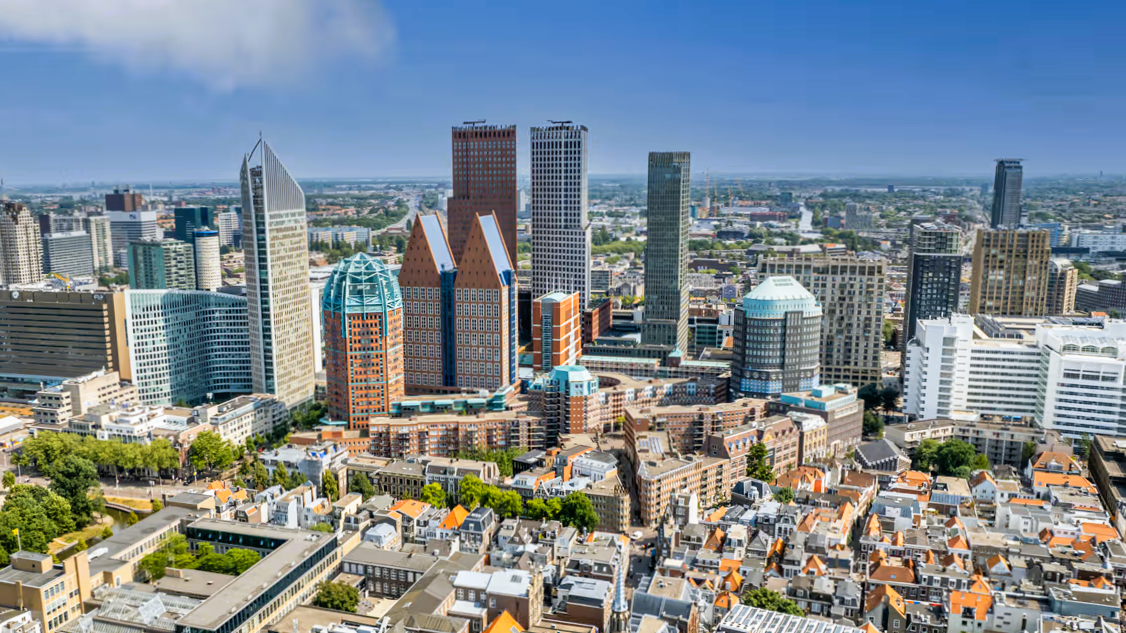
The 2025 Advisory Opinion on Climate Obligations
On 23 July 2025 the International Court of Justice gave its unanimous answer to the question put by the General Assembly in resolution 77/276. Vanuatu assembled the coalition behind that request. The Melanesian Spearhead Group filed with them. In first tongues the elders and atoll fishers spoke, while Article 39 of the Statute admits only French and English. Across that gap our translators supported the submissions of Tuvalu and Naoero in the months ahead of the December 2024 hearings, drafts leaving Funafuti in one language and arriving at the Peace Palace in another.
The opinion states that governments owe their climate duties to the international community as a whole. Reparation the judges left to the ordinary rules of state responsibility. Between capitals the negotiating texts of a follow-up resolution circulate in successive versions. The international climate cooperation material tracks its progress through the General Assembly. It falls to our linguists in Port Vila and here to bring the Fakaʻuvea version level with the English.
Advocates for New Caledonia and Māʻohi Nui came to this building decades earlier. On the United Nations list of non-self-governing territories the two names remain, under General Assembly resolution 1514 of 1960. Trusteeship judgments from that era supply the older half of the argument. The decolonisation and self-determination section documents the practice since then. For the pleadings themselves, the Court publishes its own case files.
The Peace Palace and Its Arbitration Registry
On Carnegieplein the Peace Palace has housed the Permanent Court of Arbitration since 1913. Andrew Carnegie, who paid for the building, gave one and a half million dollars in 1903. The library on the upper floor stores treaty texts and the reported practice of governments. For the precedents behind a boundary claim, lawyers from Funafuti and Tarawa consult those shelves. The Hague Academy of International Law opened its summer courses here in 1923.
Because an Annex VII tribunal under the Law of the Sea Convention needs a registry rather than a courtroom, the office upstairs administers hearings in other cities. Our maritime law and conventions chapter sets out the longer chain of instruments. Timor-Leste and Australia fixed their seabed boundary through a conciliation commission under that Convention in 2016. Two years later the commission reported. In newer disputes counsel ground the historic-use argument in declarations from master fishermen.
What a registry of this kind asks of a Pacific delegation is one clean text in an admitted language, on a fixed timetable. The two sides put the dispute in writing, memorial and counter-memorial months apart. The court interpretation and judicial transcription entry describes the cross-examination that follows. For the oral phase the terminologists build the glossary in advance. Interpreters get no second chance at a kinship term or a reef name.
Hammer DeRoburt and the Phosphate Claim
Deported to Chuuk in 1943 with about 1,200 other Nauruans, Hammer DeRoburt came home three years later to a mined-out island under Australian trusteeship. He led Nauru to independence in 1968 and held the presidency for most of the two decades after. In cabinet he spoke Nauruan, in the reports to Canberra English. In 1986 his government commissioned an inquiry into restoring the phosphate ground. Christopher Weeramantry chaired it and joined the judges in 1991. Nauru filed its application against Australia on 19 May 1989.
The claim did outlive the man. It was the judgment of 26 June 1992 on Australia’s preliminary objections that opened the merits, three weeks ahead of DeRoburt’s death in Melbourne. In August 1993 Australia agreed a payment for the rehabilitation. A fuller account of his life documents the Chuuk years. Our archival translation for Nauru keeps his division of labour intact: the elders testify in Nauruan while advocates argue resource rights in English.
Scheveningen Harbour and the Distant-Water Fleet
The fishing harbour at Scheveningen lies some four kilometres north of the tribunals. Owners along this coast crew distant-water vessels in the western Pacific, which puts Gilbertese and Tuvaluan seafarers onto European articles of agreement. At a European gangway, port-state control turns on paperwork in English. The crew welfare and port-state control pages describe the inspection routine. A grievance in Tuvaluan does not get past the inspector untranslated.
There is a further Pacific tie at this harbour, this time in the fish trade. To sell a tuna catch inside the Union takes documentation under the European rules against illegal fishing. Our fisheries enforcement schedule fixes the terminology across the fleet. From Tarawa, therefore, the flag-state records arrive here for translation. Catch papers and vessel lists became the price of entry in January 2010.
The Hollandse Kust Wind Zone
Building a grid-scale wind zone in the North Sea means tendering the seabed and the connection in one package. The Dutch state publishes the results in the national tender record. The Hollandse Kust zones lie off the South Holland coast opposite Scheveningen. In this city and at the Geneva negotiations alike, Pacific delegations must argue for generation at that scale without a northern budget.
Kiribati and Tuvalu install their generation in smaller units. Rooftop arrays on South Tarawa change the power bill at a village clinic. Though written in English, the maintenance manual arrives unchanged. A label on the pump leaves the technician on Nukulaelae guessing. Our renewable energy translators put the manuals into Gilbertese for the engineers on the atoll.
Pacific Legal Linguistic Matrix for The Hague Hub

Huri Translations
Tel. +689 89 205 483
[email protected]
PO BOX 365 Maharepa
98728 Mo'orea
French Polynesia
N°TAHITI 876649


Social