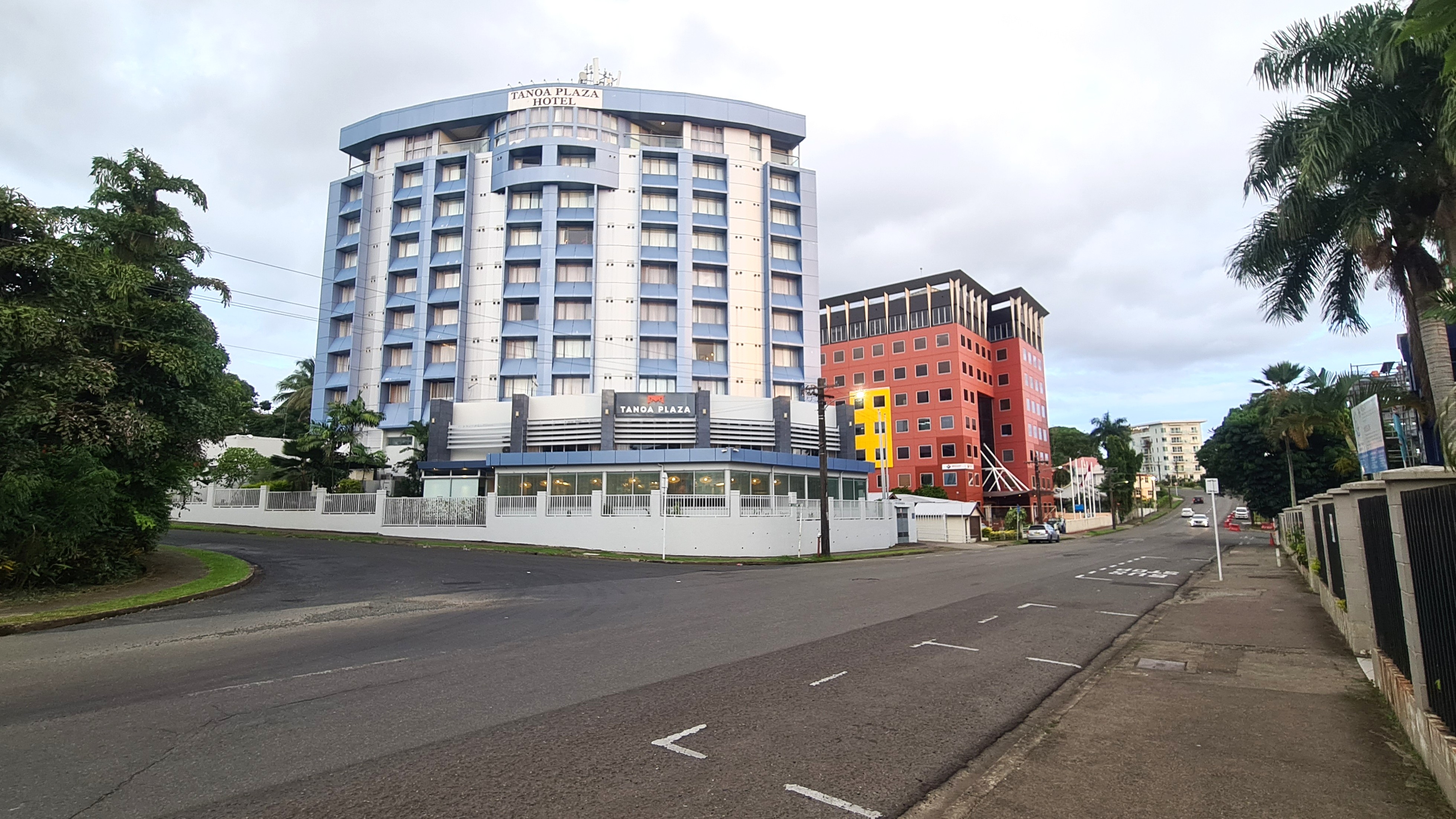
Suvavou and the Removal of 1882
Along the ridge above Walu Bay the people of Suva village kept Uluvatu, a grey rock chosen for its defences, until the colonial administration transferred the seat of the colony from Levuka in 1882. Officials removed the villagers to a Lami peninsula called Narikoso, since renamed Suvavou, or new Suva. Their former ground became the garden of Government House and afterwards the site of the national museum. The colonial paperwork does not identify a deed for the transaction, only an annual payment of £200.
Roko Tui Suva Ratu Aporosa disputed the arrangement in 1898. In the 1990s the title holder reopened it with a report of 222 pages. Suvavou families have pressed the claim since. Chiefly titles and boundary descriptions make up those files, drafted in Fijian and argued in English in the Suva courts. Our material on customary tenure and resource rights fixes the wording for a boundary description.
The peninsula long since built over, Greater Suva includes Samabula and Tamavua on the ridge, with Nasinu and Nausori across the Rewa. Roughly a third of the country’s population lives in that stretch, speaking Fijian and Fiji Hindi side by side. The Rewa river mouth marks its eastern limit. Tenancy letters at Suvavou and school circulars at Nausori address one two-language public. Suva itself became a municipality in 1910 and the first city of Fiji in October 1952.
The Girmit Records in the National Archives
Between 1879 and 1916 eighty-seven voyages brought 60,553 people to the sugar plantations of Fiji, 45,439 out of Calcutta and 15,114 out of Madras, under a contract called girmit, the Fiji Hindi form of the English word agreement. The Leonidas docked at Levuka on 14 May 1879, first of those eighty-seven. Awadhi and Bhojpuri dominated the recruits’ speech. From the two dialects a koine formed, taking loanwords out of Fijian and English. Fiji Hindi remains the mother tongue of Indo-Fijians.
What the indenture papers documented was a short set of identifiers, a name and a father’s name, with the village and thana of origin. Height and bodily marks appear on the sheets as well. The National Archives of Fiji in Suva keeps the originals in 344 volumes. UNESCO added the collection to Memory of the World in 2011, together with the indenture archives of Guyana and Trinidad and Tobago.
Descendants in Suva request the indenture record to prove a line of descent. The spelling on the sheet rarely matches current family usage, since a clerk at the Calcutta depot wrote Devanagari names down by ear. Fijian courts and visa offices need the two forms reconciled in writing. Huri files a name-equivalence note with a translated indenture record, under the terms set out for notarial documentation and apostille.
Ratu Sir Lala Sukuna and the Capital’s Legal Record
Ratu Sir Josefa Lalabalavu Vanayaliyali Sukuna took a clerk’s post in the colonial secretary’s office at Suva in 1907, nineteen years old and already at ease in Na Vosa Vaka-Viti and English. Wadham College, Oxford admitted him in 1913. The British Army refused him on racial grounds a year later. He joined the French Foreign Legion and won the Médaille Militaire. The Middle Temple called him to the bar in 1921. No Fijian had taken a university degree until then.
Two Suva posts he accepted after 1940, the native reserves commission and, in due course, the Speaker’s chair in the Legislative Council. Fijian scholarship still disputes his conviction: he did hold that the chiefly order was the proper vehicle for iTaukei advancement. The administration relied on his drafting, in Fijian for the provincial councils and in English for the statute book of the colony. Provincial council minutes supply the examples in our pages on customary law and statutory integration.
It is Sukuna Park in the centre of town that puts his name in daily Suva speech, alongside the memorial school at Nabua and a public holiday in May. Heritage and probate files still cite him. Historians in Suva keep weighing his part in the long argument over self-governance and autonomy. Chiefly titles recur throughout the paperwork, since Ratu and Roko Tui have no English equivalent. Mistranslated rank alters the position of a claimant. The fuller biography gives the dates.
Suva Harbour and the Kings Wharf Berths
There is one deep channel through the barrier reef into Suva Harbour, on the south-east coast of Viti Levu. Pilots join the ship inside it day and night. Kings Wharf measures 492 metres along the water at Walu Bay and accepts vessels to twelve metres of draught. Vessels swing in a 300-metre turning basin. Princess Wharf, shorter and shallower, berths the inter-island fleet. Suva Harbour Control answers on VHF channel 16.
Week by week, cargo for the smaller Pacific states crosses this quay. Boxes discharged at Kings Wharf are reworked and shipped on to Port Vila, Funafuti and other regional ports. Chart and warning wording behind that traffic comes out of the section on hydrography, charting and pilotage. Bills of lading and manifests change hands in English, while the stevedore hears instructions on the quay in Fijian and Fiji Hindi.
The north berth handles bunkering, the south, general cargo. These berths take about 60% of the foreign trade of Fiji. Lautoka absorbs most of the remainder. In the cyclone season the harbour master shuts the port for days at a time. The reopening notice appears in Fijian and Fiji Hindi alongside the English original, issued by the port authority.
The Cable Station at Vatuwaqa
Coming ashore at Vatuwaqa on Laucala Bay, the Southern Cross trunk has given Fiji a direct fibre path to Sydney and Hawaiʻi since November 2000. The Suva branch of Southern Cross NEXT is 309 kilometres long, ending at a junction on the Australia to United States trunk. Bulikula and Tabua followed into the identical terminal later. Tonga joins the network here by an 827-kilometre link out of Nukuʻalofa. The Tui-Samoa system ties Apia and Tuasivi to this shore end.
Fiji sells transit capacity onward to Sāmoa and Tonga, which makes the station a regional junction rather than a national one. Providers publish outage notices for subscribers in Fijian and Fiji Hindi. Fijian and Fiji Hindi lack a fixed term for latency or a repair window. Huri standardises those terms ahead of print in the subsea cable systems chapter. Subscribers therefore get three written versions of one outage.
Repair ships must obtain a permit through the maritime authority in Suva. Those applications cross three ministries in English, while the notice to the reef owners at Vatuwaqa goes out in Fijian. Customary fishing rights apply along the cable path across the reef. One wrong term in the Fijian text delays the sign-off. Technical terminology development keeps the permit and the Vatuwaqa notice saying one thing.
The Seabed Survey Archive in Suva
Mapping the ocean floor for member states began at Suva in 1972 under the South Pacific Applied Geoscience Commission. Offshore mineral surveys off Fiji and Tonga preceded it by a decade. The 1990 treaty at Tarawa gave the body its legal footing. The Pacific Community absorbed it in 2011. The archive stayed in Suva as the Geoscience, Energy and Maritime Division, with bathymetric survey lines and mineral occurrence data for the region.
The division publishes only survey-backed figures. Delegations take them into seabed negotiations. Member governments drew the division into mineral consultations across the region. Villages in Lau review an environmental summary in Fijian while the ministry uses the technical annex in English. One set of figures governs the two texts under the resource governance sequence. Boundary submissions to the United Nations use that bathymetry.
It falls to the Suva staff of the division to publish a technical summary in more than one Pacific language, since a seabed claim binds a whole population. Consultation under free, prior and informed consent fails on a mistranslated tenure term sooner than on a scientific one. Fiji and Tonga drafted seabed minerals legislation off the survey series in the 2010s, the data published in the divisional catalogue.
Laucala Campus and Its Twelve Owner Governments
Because twelve governments own the university jointly, its governing body sets language policy. The University of the South Pacific opened at Laucala Bay in February 1968, in the buildings of a Royal New Zealand Air Force flying-boat base vacated a year earlier. No 5 Squadron had flown anti-submarine patrols out of the bay since 1942 and went back to Auckland in 1967. In 1970 a royal charter took over from the founding ordinance. Campuses across the member states report to Laucala.
Researchers at Laucala send findings back to the surveyed villages only after translation. Field teams in the Rewa delta and on Kadavu produce Fijian transcripts well ahead of an English paper. Our schedule for academic institutions puts consent forms and plain-language summaries in order. Ethics reviewers at Laucala check the Fijian wording of the consent form.
To teach a first-year law course in Suva means holding two legal vocabularies at once, one Fijian and one English. Students arrive from across the region and take examinations in English throughout. Pacific-language dictionaries and orthographies have come out of Laucala since the 1970s, tracked in the supporting language revitalisation annex. The university’s own site names the member campuses.
Fijian Linguistic Matrix for Suva Hub

Huri Translations
Tel. +689 89 205 483
[email protected]
PO BOX 365 Maharepa
98728 Mo'orea
French Polynesia
N°TAHITI 876649


Social