Lucy Hansen and the Founding of a Community
Lusiana Tuga Hansen came to Anchorage in 1985 from Taʻū in the Manuʻa Islands of American Samoa. Over the following two decades she built the civic institutions of the city’s Pacific Islander population. In 2004 she opened the first Samoan-language school for elders, a class that grew into a weekend culture school held with the Anchorage School District. Her teaching brought the Samoan language into a northern city. Her language education and revitalization model gave a scattered community a shared curriculum. On the airwaves she added a Saturday radio hour aimed at younger islanders, a piece of diaspora media documenting the community in its own voice.
Hansen also led the immigration and citizenship classes for new arrivals, the everyday side of orientation and remittance guidance for families making a life far from the islands. In 2005 she raised the flags of Samoa and Tonga on Anchorage soil for the first time and founded the Polynesian Culture Flag Day. The community still holds that celebration annually. Her people continue to attach honors to her name, from a White House Champions of Change award to the chiefly Samoan title Muaimalae. Traced back to the royal house of the islands, her Manuʻa lineage is the sort of genealogy behind our heritage records. Our heritage and title translation practice keeps that pairing accurate, a personal name set beside a matai title. Fuller account: the Anchorage Museum profile.
Mountain View and the Community’s Streets
The city’s Pacific Islander life clusters along a handful of east-side streets. Along Mountain View Drive, a Samoan tailor and a florist keep shop near the churches central to the community on Sundays. A Hawaiian kitchen serving poke and kalua pork keeps the Hawaiian language in daily earshot. Fairview and Spenard add more of these families. From downtown, the pattern continues out to Eagle River. These are not sights on a map. They are the addresses of processing crews and church elders, the ordinary business of a transplanted island culture.
Much of that culture ties back to the jobs that first drew families north, the labor of the seafood plants and the resource yards. When a plant issues a safety notice or a payroll form, the food production and processing documentation behind it must make sense in Samoan and in Hawaiian to the crew on the floor. We treat that plant-floor language as our practice made local, translating the handbooks and directives in daily use across the plant. That care follows into payroll notices and grievance forms as well.
Ted Stevens Airport, Crossroads of the World
Ted Stevens Anchorage International Airport earned the name Crossroads of the World during the Cold War, when jets between Europe and Asia refueled on its runways. Geography still governs its role. Positioned on the great circle between Asia and North America, the field puts aircraft within roughly nine and a half hours of most of the industrialized world. Cargo carriers trade fuel weight for payload by dropping into Anchorage on the way through. On the field, two of the largest US freight integrators keep Asia-Pacific hubs. Many freighters on the apron never fly passengers to Alaska at all. That advantage keeps it among the busiest cargo airports on the planet, a sorting point for freight between the two largest economies.
A hub of that scale turns on paperwork as much as on jet fuel. A workforce that includes Pacific Islander crews on the ramp and in the warehouses handles the manifests and the labeling rules for restricted shipments. Outbound, perishable seafood leaves through that field, under customs entries checked to the pound. Our cargo and dangerous goods language service supports the records governing those loads. For the operator, the airport authority publishes its own reference at the Alaska International Airport System.
The Port of Alaska and Its Rebuild
Roughly nine in ten Alaskans get their inbound goods through the Port of Alaska, the fuel and building materials brought in over Cook Inlet’s Knik Arm and sent onward by road and rail. Owned by the Municipality of Anchorage, it is the state’s principal inbound seaport. Under the National Port Readiness Network, the federal government keeps it among the commercial seaports available for national defense. Its half-century-old terminals are being replaced through a capital-intensive Modernization Program backed by the municipality and the federal Maritime Administration. Engineered to a seismic standard, the new terminals should last for decades, infrastructure designed to outlast the region’s expected earthquakes. Our West Coast network connects to this durable spine, alongside our hubs in Seattle and Vancouver.
Everything crossing the docks generates a record, from vessel logs to the cold-chain paperwork of the seafood headed to market. Our maritime operations team handles the vessel side. For the seafood side, our processing documentation gives the crews their instructions in Samoan and Hawaiian. The port authority sets out the reconstruction at the Port of Alaska site.
Denaʼina Ełnena, the Homeland Underneath
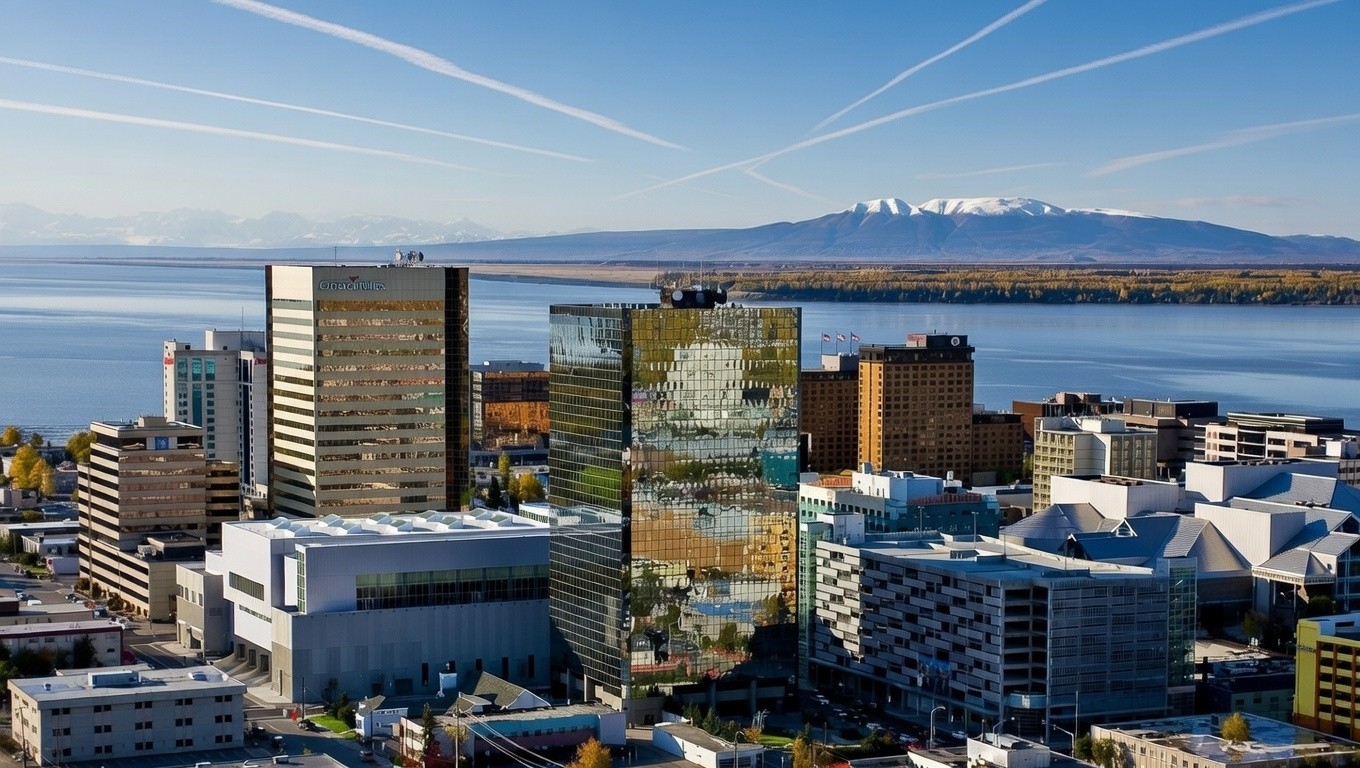
Anchorage occupies Denaʼina Ełnena, the homeland of the Denaʼina Athabascan people of Upper Cook Inlet, who have lived along Knik Arm far longer than the city has existed. On the front of the Anchorage Museum, the phrase This is Denaʼina Ełnena states as much in the language itself. The municipality marked that history in its own downtown by naming the Denaʼina Civic and Convention Center for them, giving its halls Athabascan names such as Kahtnu and Tikahtnu rather than the usual civic labels. The building sets that acknowledgment in concrete, a colonial-era default displaced by an Indigenous name.
The language beneath that name, Denaʼina Qenaga, has only a few dozen fluent speakers, which leaves it as endangered as the small Pacific tongues under our care. An okina and a macron in ʻŌlelo Hawaiʻi change meaning the way a glottal mark does in Denaʼina. Neither survives an English spellchecker. Our language revitalization service rests on keeping those marks intact, in heritage records and place-name documentation alike. A fuller history of the people appears in the Denaʼina reference.
Pacific Linguistic Matrix for Anchorage Hub

Huri Translations
Tel. +689 89 205 483
[email protected]
PO BOX 365 Maharepa
98728 Mo'orea
French Polynesia
N°TAHITI 876649


Social