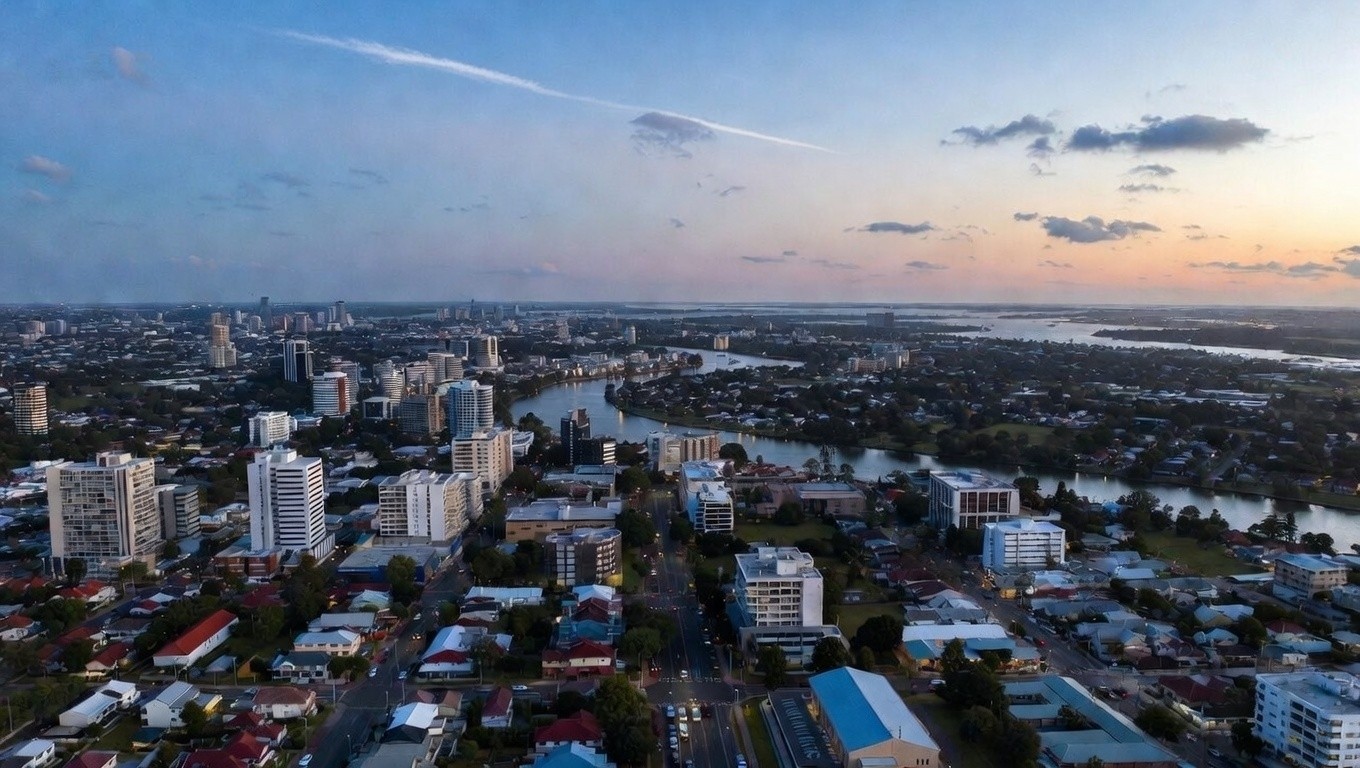
Maritime Trade at the Port of Brisbane
At the mouth of the Brisbane River, on Fisherman Island, the Port of Brisbane is the state’s largest multi-cargo port and the third busiest container terminal in the country. Around 95% of Queensland’s containerised trade crosses its berths, together with roughly half of Australia’s agricultural exports. Resource cargo and refrigerated meat leave for markets around the Pacific rim, while the shipping documents behind them change languages on the way to customs clearance.
Those manifests describe cargo drawn from Queensland’s mines and cattle stations, the domain our practice in mining and resource extraction was built to support. A bill of lading translated loosely can strand a container at the wharf. Against that risk, our linguists align the technical registers of English and Tok Pisin with the terminology of Australian trade and biosecurity documents. Two sibling nodes join Brisbane in this network: our Honiara page for the Solomons and our Sydney page for the southern diaspora.
South Sea Islander Heritage in Queensland
In 1863 the first sixty-seven South Sea Islanders landed at Brisbane, set first to cotton and then to the cane fields spreading north along the coast. Over the following four decades, labour ships took more than 62,000 people from the islands of Vanuatu and the Solomons, a coerced trade recorded in Australian memory as blackbirding. Their descendants form the largest non-Indigenous Black community in the country. Many still trace kin to the home villages of their forebears.
The languages of those communities remain in daily use across Melanesia: Bislama in Vanuatu and Solomon Pijin in the Solomons. Federal recognition of Australian South Sea Islanders as a community in their own right came only in 1994. For descendants tracing that ancestry, our practice in legal and government translates the older birth and church records into English.
Contracts for the PALM Scheme
Rural Queensland growers approved for the Pacific Australia Labour Mobility scheme draw their seasonal staff from across Melanesia. The English contract governs under Australian law, while the worker signs on the strength of the Bislama or Solomon Pijin version.
Because the checklist for approved employers changes with policy, the current requirements live on our immigration and labour mobility page rather than here. What stays constant is the worker’s need for a contract legible to a Ni-Vanuatu or Solomon Islander reader ahead of the first shift of the season.
Melanesian Linguistic Matrix for Brisbane Hub

Huri Translations
Tel. +689 89 205 483
[email protected]
PO BOX 365 Maharepa
98728 Mo'orea
French Polynesia
N°TAHITI 876649


Social