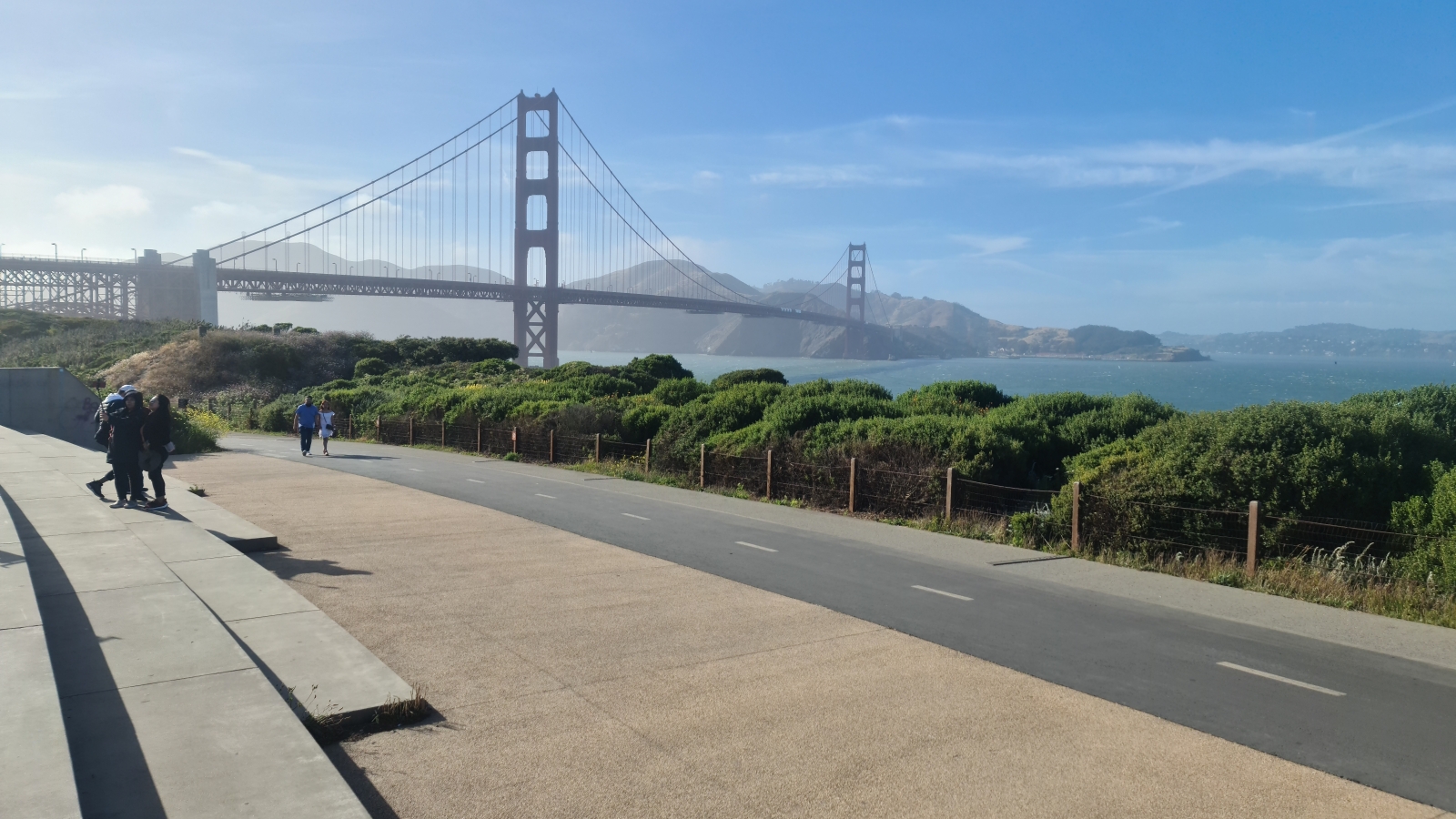
Ocean Beach and the First Cable to Honolulu
Paying out the first transpacific telegraph line from Ocean Beach, just under the Cliff House, the cable ship Silvertown finished its crossing at Honolulu in 1902. Traffic opened on New Year’s Day, 1903. Westward the sections stretched to Midway and onward to Manila. Copper has since given way to fiber, without altering the geography of the connection: the western edge of San Francisco remains the American end of the Pacific wire.
While tapping out island place names, clerks at the key flattened the okina and the macron into plain code. Fiber did not fix the orthography, though it lifted the character limit. In current documentation a residue of that habit survives. The subsea cable systems specialists catch it whenever outage notices go out to Pacific operators.
There survives a written account of the consortium, which kept its papers half a century. The Commercial Pacific Cable Company record still identifies the beach as the terminus of the American section. It was Honolulu that held the far end of that line in 1903, as it receives the greater part of our Hawaiian translation assignments out of the Bay Area today.
Kalākaua’s Last Winter in the City
Between 1874 and his death on January 20, 1891, David Kalākaua reigned over the Hawaiian Kingdom. Twice the city received him as a sovereign, first in 1881 at the opening of a circuit of the globe, then in December 1890 under medical orders. A composer as well as a monarch, he wrote the anthem still sung in ʻŌlelo Hawaiʻi and restored the hula banned by an earlier regency. Hawaiian music and performance descends from that revival. Treaty negotiation and a Polynesian confederation proposed to Sāmoa filled his statecraft, the ground beneath our legislative materials and language revitalization files.
After a state funeral in the city drew an estimated hundred thousand onlookers, the USS Charleston returned the body to Honolulu. Scholars in Hawaiʻi argue to this day that the 1887 constitution, signed under armed pressure, left the throne without most of its authority. What the families kept is the music. Mele of his composition remain in use across the Bay Area. In any title sent to Moʻorea, the diacritics must hold. The encyclopedic biography of Kalākaua sets out the reign with its dates and its disputes.
Interfaces Bound for the Islands
To hit a release date, a San Francisco product team freezes its strings early. The Pacific portion of an install base, small and easily overlooked, disappears in that freeze. It takes one build to lose a vowel mark for good. Picking up the Lea Faka-Tonga and ʻŌlelo Hawaiʻi text afterward, our reviewers test vowel length against the chosen font and against the truncation limits of the interface. The pipeline itself, from resource files to help center screenshots, lives under software and UI localization.
In terminology the two languages diverge. Hawaiian technical vocabulary has been coined deliberately since the 1980s through a lexicon committee, while Tongan usage is consolidating more slowly by way of church printing and radio broadcast. Neither the committee nor the printing house is likely to accept a loanword dropped in by a translator. Our technical terminology development practice records the difference in a glossary, its sources attached entry by entry, ready for the Lea Faka-Tonga localization reviewers at the following release.
Map data brings the other recurring request. Street and district names from Hawaiʻi enter vendor feeds with the okina dropped, an error visible only when the map draws on the device. Which spelling enters the feed is decided upstream. Our e-government and digital platforms notes locate the repair at the data source, sparing the interface forty separate corrections downstream.
Court Hearings Without a Local Interpreter
Immigration and family matters bring Tongan speakers into Bay Area courtrooms with no interpreter of their language nearby. Interpreting in the hearing room follows protocols of its own, set out under court interpretation and judicial transcription rather than rehearsed here. A few hours west of the courtroom, the interpreter is in Moʻorea. The time difference makes a San Francisco morning calendar an island dawn.
Ahead of the date, counsel send us the paperwork, civil entries from Tonga and statements taken in Lea Faka-Tonga. Our cross-border and diaspora legal work page lays out the sequence at length. However, families arriving on seasonal contracts need something else, the plain-language orientation on rights and remittances, prepared for the opening weeks by the Tongan translation staff.
Across the bay, hearings go to our Oakland node, and state filings, to Sacramento, seat of the California legislature since 1854.
Reef Science in Golden Gate Park
Chartered in 1853, the California Academy of Sciences houses its natural history collections and its aquarium in Golden Gate Park. Its divers survey mesophotic reefs well under recreational depth, in Palau and across French Polynesia. New species surface with a Latin binomial attached, though the fish were named centuries ago in the languages of the people fishing above them. Place the binomial beside the village name. One report absorbs the two, of which the vernacular is the elder.
Fieldwork of this kind generates consent documents for the villages nearest a site, alongside a continuous flow of permit correspondence. To prepare those in Pacific languages falls to our ocean science and research group. The vocabulary of currents and coral belongs with marine research. Tongan linguists check the vernacular forms against village usage, which keeps a ministry submission clean.
Only an institution older than the park around it can monitor a reef over decades. The California Academy of Sciences publishes its full scientific program. Species descriptions do appear in English, while the summary arrives in the local language, a courtesy with consequences for the next permit round. In that arrangement our portion stays small and constant, the island-language half of the documentation.
Pacific Linguistic Matrix for San Francisco Hub

Huri Translations
Tel. +689 89 205 483
[email protected]
PO BOX 365 Maharepa
98728 Mo'orea
French Polynesia
N°TAHITI 876649


Social