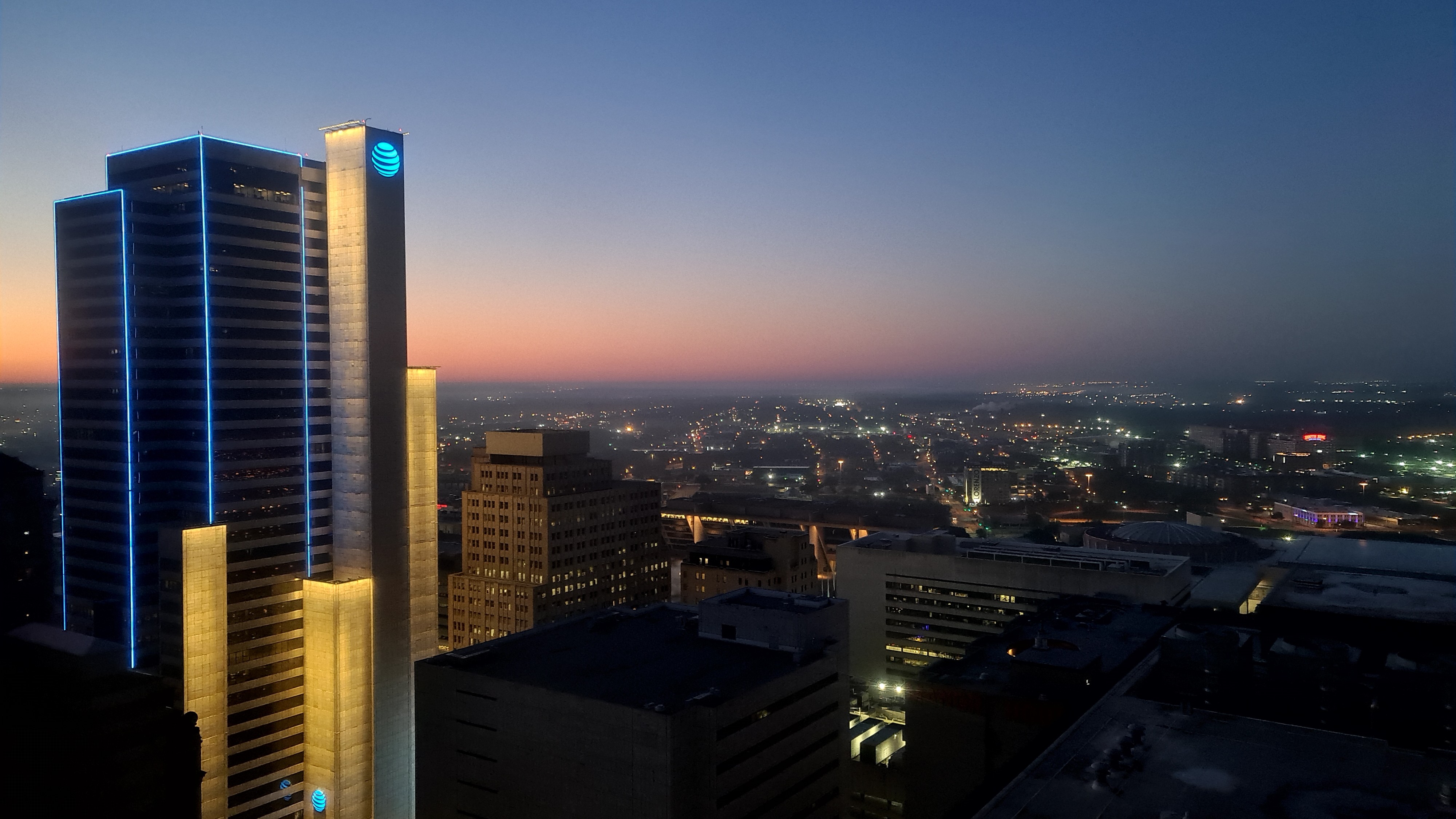
Mark Tuinei and the Great Wall of Dallas
Born in Oceanside and raised on Oʻahu, Mark Pulemau Tuinei gave fifteen seasons to the Dallas Cowboys, a career bound to one team, his given name intact on the roll. The Samoan word Pulemau followed him from the islands onto the offensive line. Across that tenure he opened lanes for Emmitt Smith and shielded Troy Aikman, which knit a Samoan lineman into the spine of a Texas dynasty. In the Gagana Sāmoa spoken across his family, he stayed a son of the Pacific through three championship runs, one part of a front the city called the Great Wall of Dallas, a line of five who guarded the pocket.
It was in the suburb of Plano that his life ended in 1999, at thirty-nine, far from the Nanakuli shoreline of his boyhood. The Polynesian Football Hall of Fame later claimed him. The game once graced by his play lies open to young Islanders, a road walked by their own strength. For families keeping a Samoan surname alive across generations of English paperwork, our Samoan translation and our backing for language revitalization restore its spelling, macron and all. The full span of those years, from the 1983 signing to the 1997 retirement, is set out in his published biography.
The Airport the Two Cities Own
Broader than the island of Manhattan, Dallas Fort Worth International rests on acreage owned jointly by its two namesake cities, a public expanse of runways at the edge of Euless. Through its gates depart the widest set of nonstop flights in North America, among them the seasonal service to Auckland and the links bringing the diaspora back toward Apia and Majuro. There is no larger hub for one airline anywhere in the country. By night its freighters take on cargo for two hundred markets, a crossing of goods and of people alike.
Because a superhub keeps thousands of technicians and cabin crews aloft and on the ramp, its safety manuals and maintenance records must state one meaning across several tongues at once. For the Samoan and Marshallese hands in that workforce, our aviation training materials turn federal procedure into first-language instruction. The southern share of that traffic falls to our Houston team, a Gulf-facing companion to the Texas practice.
A Name Meaning Friend
Centuries ahead of the metroplex, the banks along the Trinity River belonged to the Hasinai, a Caddo people of the eastern woodlands. The Caddo had raised a ceremonial world across the region a thousand years earlier. From their word of greeting, táyshaʔ, meaning friend, the Spanish drew Tejas, the root beneath the word Texas. The very name of the state is a Caddo hello. By 1859 the United States had driven the Caddo north to Indian Territory, the survivors enrolled today as the Caddo Nation of Oklahoma.
Here, two ancestral histories cross on one ground: the Caddo whose country became Texas, and the Islanders whose ocean nations stretch from Sāmoa to the Marshalls. For peoples bringing their own tongues into the diaspora, keeping a language alive becomes common cause across water and prairie. Caddo speech itself fell close to silence and returned through classroom and recording. Our translators in Indigenous rights frame consent and heritage papers to let a Marshallese or Samoan voice govern the English.
The Medical Campus on Harry Hines
Along Harry Hines Boulevard, UT Southwestern Medical Center has turned decades of Nobel-winning biomedical research into a plain fact of North Texas life. What began with the statin story continues through its genetics program and the Dallas Heart Study. Its scientists mapped the cholesterol receptor itself, a finding since built into medicine worldwide. Physicians here have shown that human metabolism can be rewritten. A cohort of that scale is capital laid down for a century, not a season.
Diabetes and cardiac disease press hard on Samoan and Marshallese communities. From the years of nuclear testing, the Marshall Islands bear a further toll on the body. The Peter O’Donnell Jr. School of Public Health widens that inquiry into whole populations, the Touchstone Center tracing that illness to its metabolic root. When enrollment opens to islander participants, the consent forms and public health notices must appear in Kajin M̧ajeḷ ahead of any signing. Our translation of clinical files into Kajin M̧ajeḷ gives that signature its footing.
Marshallese Status Under the Compact
Under the Compact of Free Association, citizens of the Marshall Islands may live and earn a living across the United States without a visa. Neither a passport nor a green card frames that arrangement. Children born on Texas soil to islander parents inherit that standing, their claim written into the public rolls. Paper still governs the status, from vital records to the school histories needed by a county clerk in English. The shifting checklist of eligibility lives on our Compact pages, kept current in one place.
It fell to a 2020 federal restoration to return Medicaid to Compact migrants, a right stripped away a generation earlier. Two files, one in Kajin M̧ajeḷ and one in English, follow relatives between Majuro and the mainland. For the largest of these communities, gathered in Springdale, Huri prepares civil documents in Marshallese with seals acceptable to a court. A birth certificate handled this way shows the child’s name in the diacritics the Marshallese alphabet asks for.
Head Offices on the Prairie
One corporate headquarters after another has crossed into the metroplex, drawn by open country and light tax. Between the two downtowns spread the mid-cities, the daily ground of much of that workforce. On the shop floors and in the service bays of those firms, Samoan and Marshallese employees fill a labor market short of hands.
An employment contract binds a Samoan hire only when its clauses appear in Gagana Sāmoa, the force of the English intact. Through our practice in business and commerce, those agreements take their lawful shape. Their internal software arrives on home screens by way of our Samoan localization.
Pacific Linguistic Matrix for Dallas Hub

Huri Translations
Tel. +689 89 205 483
[email protected]
PO BOX 365 Maharepa
98728 Mo'orea
French Polynesia
N°TAHITI 876649


Social