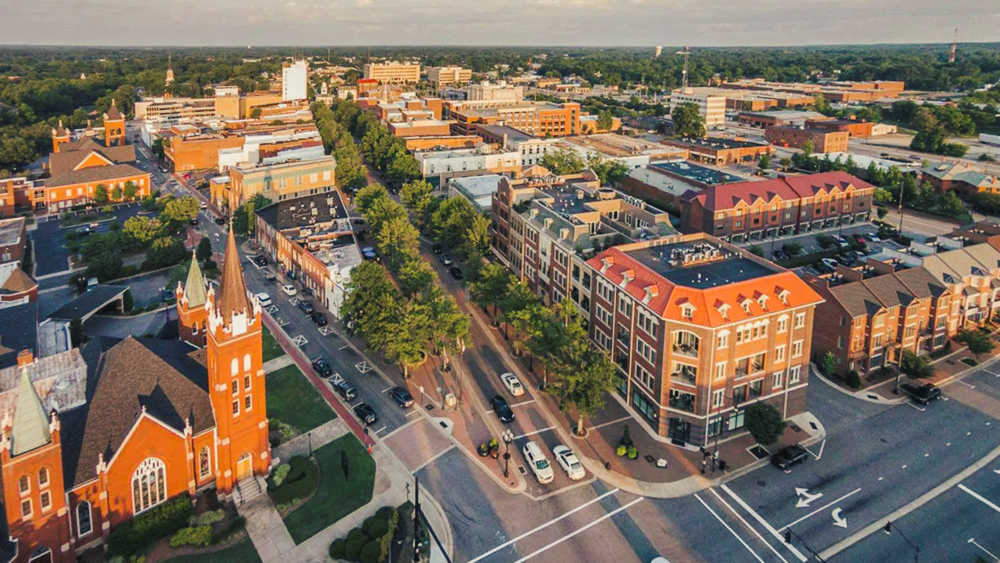
The Sandhills Post and the Samoan Enlistment Tradition
It is the Sandhills, the sandy pine country north of the city, that the Army chose for Fort Bragg, the post training the airborne and special operations forces for roughly 57,000 soldiers. Its name has changed more than once of late, from Bragg to Liberty and back to Bragg. Even so, the ground and the mission outlast the sign at the gate. American Samoa sends its people into uniform at a rate above any state or territory, which fills this post through the rotations of a career. For the Gagana Sāmoa families among them, Huri Translations prepares the administrative records a posting generates, from powers of attorney to enrolment forms for children in Cumberland County classrooms.
When a soldier deploys overseas, the family left behind minds the domestic accounts in Samoan across generations of uneven English. Huri Translations produces the lease agreements and the healthcare proxy documents. Samoan-speaking relatives can then manage those affairs through the length of a deployment.
Samoan Names on the Memorial Wall
Watched since 1969 by a bronze Special Forces soldier, the memorial plaza bears a wall of more than a thousand names of the fallen. Among them are Pacific Islanders whose families crossed from American Samoa into the airborne and special-operations units of Fort Bragg. Those families brought Samoan with them, a language tying public service to the older question of Samoan self-governance.
Neither statehood nor birthright citizenship belongs to the people of American Samoa, who hold US-national status under an unincorporated territory. That standing turns a Samoan military family’s paperwork toward proofs of identity, from name-and-title records to the archival transcription kept for the generation to come. Huri Translations delivers those proofs in Samoan for the Cape Fear families, from a birth record to a matai title certificate.
Veterans Along the Cape Fear
After the last posting, a sizeable number of Samoan veterans, retired soldiers of the airborne divisions, make their homes across Cumberland and Harnett counties. Their dealings with the Department of Veterans Affairs and with North Carolina agencies hinge on English-language instruments of benefit and survivor provision. Huri Translations puts those instruments into Samoan for the veteran, from the award letter to the disability rating, without a bilingual relative mediating a medical record or a claim decision.
Once at the appeal stage, a claim swells into adjudication letters and independent clinical opinions in dense administrative English. Huri Translations assembles the Samoan versions needed for a veteran to track the file and answer it on time. The Tongan and Chamorro veterans of these counties receive equal attention, mirrored for the Pacific families beside Fort Cavazos in Killeen and the naval yards of Norfolk.
The Classroom on Murchison Road
Fayetteville State University is the second-oldest public campus in North Carolina, founded in 1867 as the Howard School by seven Black citizens on two purchased lots. It has taught the region ever since: the University of North Carolina system took it in during 1972. From the neighbouring post, a heavy military intake crowds its classrooms. Samoan and Chamorro soldiers finishing degrees between deployments approach Huri Translations with foreign transcripts and credential evaluations for academic admission.
Its extension programmes present on the post itself, the college yields a regular flow of enrolment and certification paperwork for Pacific Islander families. Huri Translations furnishes the Samoan and Chamorro counterparts to those forms, giving a parent the child’s degree audit and a veteran the tuition-benefit letter in the first language of the family. That documentary chain, from admission file to diploma, marks the education side of Huri Translations in Fayetteville.
Pacific Linguistic Matrix for Fayetteville Hub

Huri Translations
Tel. +689 89 205 483
[email protected]
PO BOX 365 Maharepa
98728 Mo'orea
French Polynesia
N°TAHITI 876649


Social