Survey Lines and Interpreter Mileage
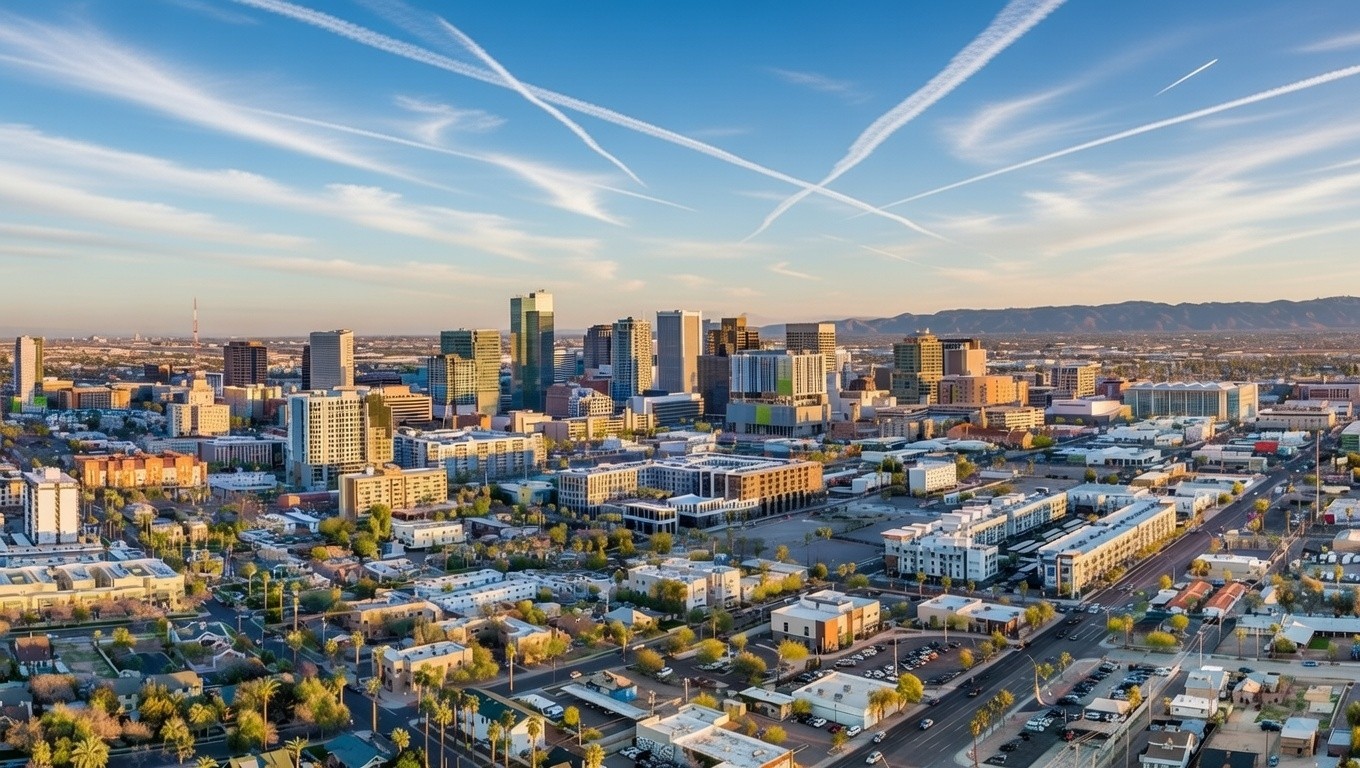
Laid out on a one-mile survey grid since 1878, Mesa spreads its Pacific families along section lines across the whole plat. North of Main Street lies Lehi, the oldest farmed ground inside the city limits. Dobson Ranch occupies the southwest, Red Mountain and Alta Mesa the northeast, with the Superstition Freeway cutting between them. Booking a Chamorro interpreter here turns on the address as much as on the dialect: a parent conference in Lehi and a shop-floor session at Red Mountain are forty minutes apart.
Given that geography, we keep our Mesa term bases apart from the ones built for Phoenix. Vocabulary from a downtown courtroom overlaps almost none of a hangar’s. In any case, aerospace entries want versioning against manufacturer manuals, since a revision number rewrites a warning long after the warning itself is fixed. Which base answers a Mesa job therefore comes down to the address. Chamorro translation memories for the East Valley default to maintenance phrasing.
The Platform Mound Recovers Its O’odham Name
Between AD 1100 and 1400, Hohokam builders raised a caliche platform mound on the terrace above the Salt River, twenty-seven feet tall and longer than a football field. Through the twentieth century the site answered to a Spanish descriptor. It has since been renamed Sce:dagĭ Mu:val Va’aki, an Akimel O’odham phrase restored by the descendants of the builders. Of the two Hohokam mounds surviving in the metropolitan area, this one is the larger.
There remains around it a canal grid still shaping irrigation across the valley, a piece of engineering outliving its makers by six centuries. Beneath the modern channels, sections of it are intact. Ownership of the name, though, arguably belonged to the O’odham throughout. Excavation history appears in the encyclopedia account of the mound, down to the caliche cell structure under the summit.
Throughout Guam and the Northern Marianas, CHamoru spellings have been returning to villages and streets for decades, the paperwork following through deeds and civic atlases. Diacritics are the hazard: a glottal stop dropped from a place name in a title document can break a chain of ownership. Our language revitalization support ships two artifacts, an orthography table keyed to Unicode and a variant list for clerks on legacy keyboards.
What Mesa High Remembers of Vai Sikahema
Born in Nukuʻalofa in 1962, Vai Sikahema arrived in Arizona by way of Hawaiʻi, his parents having crossed to the Church College of Hawaiʻi and earned the fare at the Polynesian Cultural Center. The family remained in Mesa thereafter. Playing for Mesa High School, he took the Jackrabbits to the 1979 state final. A scholarship to Brigham Young University followed. It was the St. Louis Cardinals who drafted him in 1986, making him the first Tongan in the National Football League.
Two Pro Bowl selections came out of his opening seasons, and a second occupation in broadcast journalism, out of the years after them.
Mesa High honored him among its Jackrabbit greats in 2017, one year after the Polynesian Football Hall of Fame inducted him. What the citation shows is a Pacific surname coming through four decades of Arizona paperwork intact, which is rarer than it sounds. Neither the glottal stops nor the macrons of lea faka-Tonga emerge from an American form field unassisted. Athletic files form a genre of their own, handled by our sports and entertainment specialists beside family genealogies. The biographical entry sets out the draft year and the return-yardage totals.
Falcon Field After the Royal Air Force
In September 1941 Falcon Field opened as No. 4 British Flying Training School, one of six such schools contracted across the United States. Royal Air Force cadets flew Stearman biplanes over the desert northeast of town. Twenty-three of them lie in the municipal cemetery. Deeded by the federal government to the City of Mesa in 1948, the 784-acre property has been municipal ever since. The airport history dates its two surviving hangars to 1941 as well.
Because reliever fields draw flight instruction and charter traffic, their documents turn technical from the opening page. Airworthiness directives and task cards leave a technician no latitude to guess at a verb. When signing off a card, a Chamorro-speaking or Palauan-speaking mechanic needs the wording behind that signature unambiguous in the signer’s own tongue.
Our aircraft maintenance line puts such material into Chamorro and Palauan from a controlled English source, torque tables included. It takes a sentence written to one verb and one clause to survive the crossing into a language with no aviation lexicon of its own. Some English terms have been borrowed outright into the Marianas. The glossary does mark those borrowings rather than papering over them with a calque.
On the Ground of Williams Air Force Base
Until its closure in 1993, Williams Air Force Base produced a quarter of the United States Air Force pilot intake. Mesa absorbed most of the acreage afterwards. Onto the runways came Phoenix-Mesa Gateway Airport. Barracks and storage buildings went to the Polytechnic Campus of Arizona State University, joined on the site by Chandler-Gilbert Community College. Among the newer halls a 1941 warehouse survives under federal heritage protection, the campus article placing its construction in December of that year.
Teaching aeronautical management and air traffic coursework, Polytechnic draws Compact of Free Association students from Palau and the Federated States into an English-only lecture stream. Transcripts and competency statements then head the opposite way, out to island authorities and to the families themselves. Registrars know that a credit-hour figure misconstrued in a Palauan transcript costs a student a semester. However, one glossary answers the two directions, from academic institutions through to aviation training, with course titles locked to the catalog phrasing in force at the time.
Dubbing Chamorro at the Mesa City Center
A hundred-million-dollar joint venture of Arizona State University and the City of Mesa, the Media and Immersive eXperience Center holds four soundstages plus a recording room switchable between Dolby Atmos and third-order ambisonics. Into the building went the production and post-production programs of The Sidney Poitier New American Film School. Only one Foley stage of that class exists in Arizona, on the ground floor here.
Outside, a plaza with a hundred-foot screen adjoins the entrance. The institutional studio listing puts the immersion volume at three stories, high enough for a motion-capture rig above a performer on the floor.
Of all our formats, immersive media sets the hardest localization target. Dialogue fits a lip flap and a subtitle window at once, while spatialized audio adds a bearing to the problem. Dubbing into Chamorro or Palauan means building the lexicon first, since no term list exists for either until we make one alongside a voice cast. To keep that vocabulary stable across a season, our content creation and production team drafts it beside our Belau localization staff, who take the Palauan interface strings and the on-screen titles.
Micronesian Linguistic Matrix for Mesa Hub

Huri Translations
Tel. +689 89 205 483
[email protected]
PO BOX 365 Maharepa
98728 Mo'orea
French Polynesia
N°TAHITI 876649


Social