
Thant of Pantanaw and the Trusteeship Years
In December 1961 the General Assembly handed the third secretary-generalship to a schoolmaster from the delta. Thant, a graduate of the University of Rangoon and a former head of the government press office in this city, stayed in the post until the last day of 1971. Nauru left United Nations trusteeship on 31 January 1968 during his tenure. Two years later, on 13 October 1970, Fiji took its seat in the Assembly. Those two admissions generated constitutional and treaty paperwork of the sort described in our Legislative Materials pages, with the decolonisation history gathered under our Decolonization and Self-Determination entry.
Cataloguers stumble over the honorific in front of his name. U marks an adult man in Burmese usage. On its own, the given name is Thant. Western catalogues have indexed him under the title ever since, which turns one man into two people whenever a database matches on a surname. To head off that split, our Burmese translation linguists attach a name-equivalence note to files of this kind, one line marking the personal element of a Burmese name for an archivist in Auckland. The biography of Thant gives the fuller account. Soldiers took the coffin back from the university campus and buried him at the southern stairway of the Shwedagon Pagoda on 11 December 1974.
Dalhousie Road Becomes Maha Bandula Road
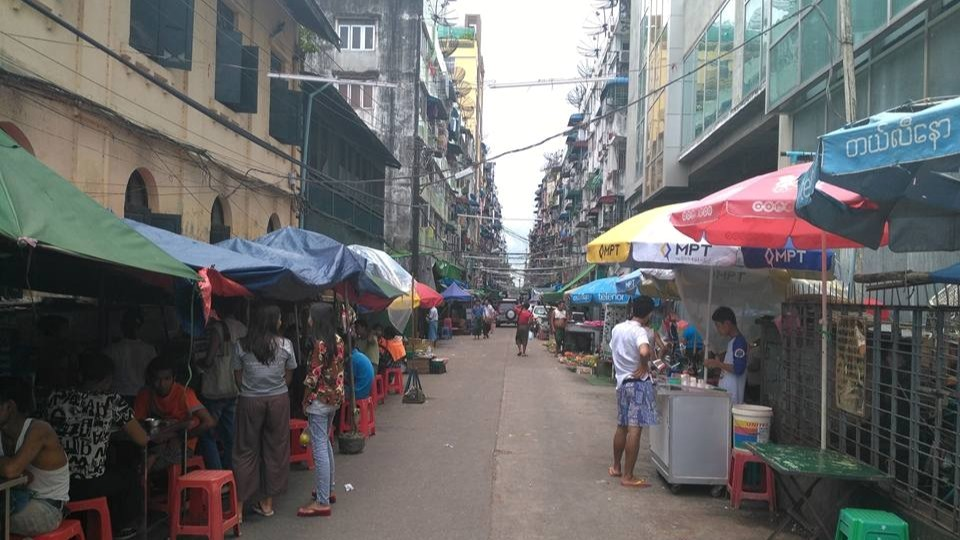
Renamed after independence for the general who fought the British in 1824, Maha Bandula Road crosses downtown Yangon west to east. Pansodan Street shed the name of Arthur Phayre in that programme of replacement. In 1989 Yangon displaced Rangoon in official English. The renamings put Burmese names into positions once occupied by British ones. Signage and freight paperwork did follow, at their own speed. As a result, a 1950s bill of sale and a current title deed can describe one street under two names. The colonial form survives in the documented history of the road.
There are two English spellings in circulation for most of these names, one from the colonial gazetteer and one from the 1989 transliteration. A translator picks the spelling used by the receiving ministry, then holds to it across the whole file. Half an ocean away, Aotearoa New Zealand went through a comparable exercise, restoring Māori names to its official maps, a process our Language Revitalization chapter sets out. Our Māori translation staff write the macrons into the target text, since a dropped macron in te reo Māori produces a different word.
Twenty-Eight Berths on a River Port
Along the Yangon River, 28 berths and 4,640 metres of quay make up the inner harbour of the port. In a normal year, about 90% of Myanmar’s imports and exports cross those wharves. The river sets the ceiling: an inner-harbour berth takes a vessel of 200 metres and 9.6 metres of draft, no more. Under those limits the sailing list answers to channel depth and the dredging cycle, matters detailed in our Hydrography, Charting and Navigation annex. The Myanma Port Authority publishes the berth figures.
Loading pulses for export starts with a phytosanitary file. Black gram and pigeon pea go out through these wharves to buyers in South Asia. A consignment bound for Suva answers to a different quarantine schedule, drawn up in English and checked against the importing country’s list. Well ahead of the crane, our Burmese team puts the inspection wording into English, a customs precondition named in Phytosanitary and Biosecurity Protocols.
Deeper Water at Thilawa
The outer harbour at Thilawa lies 16 kilometres downriver from the city centre. Its 20 berths and 3,801 metres of quay take vessels of 300 metres and 50,000 tonnes. It is the extra metre of draft that separates the two harbours. From there, boxes for the island states transship at Singapore or Manila. A Myanmar exporter picks the hub by the depth of the berth. Figures behind that choice appear in the record of Thilawa Port.
Because the industrial zone next to the terminal was built with Japanese public finance, its safety notices and machine manuals appear in Japanese first. Our Japanese translation unit handles the source text. A Burmese native speaker produces the target. Downstream of that pairing, a shipping line does not accept a bill of lading with a mismatched consignee name. Three clerks can transliterate one Burmese company style three ways. It falls to the exporter to reconcile those spellings across the whole set. Our International Trade terms explain the contract chain behind such shipments.
The Delta and the Last Mile of a Warning
Six days ahead of 2 May 2008, the national meteorological department in Yangon began issuing cyclone bulletins. Nargis then crossed the Ayeyarwady Delta with a surge of several metres and killed about 138,000 people, a toll listed in the published account of the storm. To the towns, state radio broadcast the warning. Radio sets were common there, scarce along the creeks. Much of the delta lies under three metres of elevation.
Plain wording decides the response. A surge bulletin must give the water height in metres and the hours remaining, in the language of the village on the water. At Port Moresby a district officer faces an identical last mile, with the delta of the Purari in place of the Ayeyarwady. Our Tok Pisin translation linguists prepare the coastal bulletin for the districts on that coast, the drafting order set out in our Early Warning Systems sequence.
Palm Leaf, Parabaik and the Transcript
To catalogue 15,000 palm-leaf bundles and 4,000 parabaiks takes a Burmese specialist in old orthography. The Universities’ Central Library on the campus keeps the collections alongside 600,000 books. In December 1920 the University of Yangon took its charter under the Rangoon name. Strikes against the colonial administration began on its ground within days and again in 1938. For the bundles themselves, digitised finding aids belong to our Burmese localisation line. Scholars enter the collection through Burmese.
A graduate leaving Yangon for Auckland or Sydney arrives with a transcript in Burmese script. What the assessing office needs is an English version of that transcript with the honorifics explained, the phrasing agreed against our Academic Institutions guidance. Crew agents in Yangon file a comparable set for Burmese seafarers joining vessels in the Pacific, the subject of our Asian Labour Flows into the Pacific material. We supply that version together with a name-equivalence note, since U and Daw are titles rather than given names, a note filed beside the qualification.
Indo-Pacific Linguistic Matrix for Yangon Hub

Huri Translations
Tel. +689 89 205 483
[email protected]
PO BOX 365 Maharepa
98728 Mo'orea
French Polynesia
N°TAHITI 876649


Social


