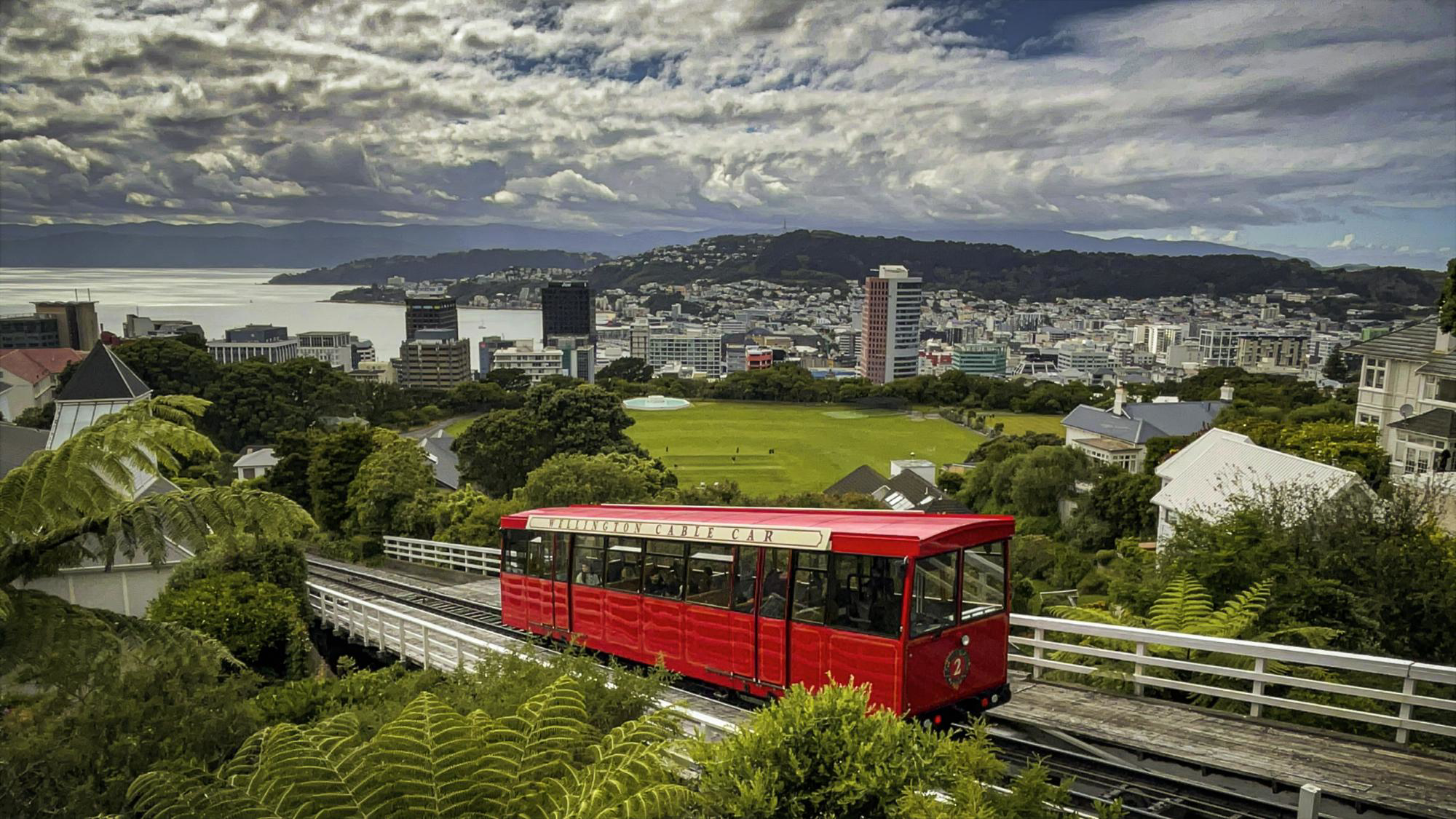
Kupe’s Names in the Harbour
Kupe named two islands in Te Whanganui-a-Tara for his daughters Matiu and Mākaro. The harbour itself bears the name of Tara, whose father Whātonga captained the Kurahaupō canoe south from Māhia. Even so, the written account of the great harbour of Tara starts with the surveyors of the 1840s, nine centuries later. Our Pacific maritime heritage terms list the vocabulary shared between these islands and Rarotonga.
Rarotongan and Tahitian navigators know those stars by words close to te reo Māori, a closeness that traps translators when one term changes sense across two archipelagos. While indexing star names for curriculum texts, our editors keep the two lists apart. Our cultural education material sets them side by side in Tahitian and te reo Māori.
Pacific Families in the Porirua Basin
In the basin north of Te Whanganui-a-Tara, the state housing suburbs of Cannons Creek and Waitangirua housed Samoan and Tokelauan families from the 1960s, within a bus ride of the meat trade and the car assembly lines of the day. The Tokelau Islands Resettlement Scheme of 1966 directed its first arrivals to forestry towns on two-year contracts against the cost of their passage. Chain migration afterwards brought more than half of Aotearoa’s Tokelauans to Porirua and the Hutt Valley: the national encyclopaedia dates that movement to a cyclone in February 1966.
There is a constant flow of civic paper through these suburbs, from tenancy letters to hospital appointment slips. Huri linguists produce the Tokelauan and Samoan versions of that correspondence for the ministries commissioning it, matched to the literacy level of the English source. Our patient-facing translation entry states the clinical standard for the medical wording, while the northern half of this migration belongs to our Auckland hub.
The country’s first Tokelauan language nest opened in Petone during the 1980s. Church halls across the basin still teach on that model, Saturday by Saturday, under teachers drawn from the congregations. Printing early-childhood guidance, the government presses commission a Tokelauan edition alongside the English. Our language revitalisation pages supply the classroom texts in the orthography of the nests, macrons intact.
Māui Pōmare and the Cook Islands Portfolio
Māui Wiremu Piti Naera Pōmare, a physician of Ngāti Mutunga and Ngāti Toa descent, won the Western Māori seat in 1911 and took the Cook Islands portfolio five years later. He spoke te reo Māori in a Parliament conducting its business in English, which left Rarotonga’s schooling and courts under a signature given three thousand kilometres away. It was the health portfolio from 1923 that produced his national maternity reform and the public health vocabulary still current in our clinical glossaries. He opposed self-government for the islands and pressed English on Rarotonga’s classrooms. Cook Islands historians dispute that part of his tenure to this day.
By his death in 1930, Wellington had printed twelve years of legislative drafting for Rarotonga and Niuē. Families tracing a title or a baptism find those clauses in English, a century after the debates. Huri turns them back into Cook Islands Māori for heritage claims. In turn, our self-governance chapter sets out the constitutional ground for that history. The Dictionary of New Zealand Biography documents the whole career.
Te Papa Tongarewa and the Pacific Holdings
Keeping the country’s Pacific holdings under one roof is the statutory duty of Te Papa Tongarewa, chartered in 1992 and open on Cable Street since 1998. Its curators catalogue Samoan siapo alongside Tongan koloa under the maker and the island of origin. The museum maintains a research library called Te Aka Matua, which holds the printed record beside the objects.
It has been museum practice for decades to label Pacific items in the language of their makers. Huri supplies the exhibition text in Gagana Sāmoa and the consent wording for cultural property agreements with descendant communities. Loan correspondence with Nukuʻalofa needs Lea Fakatonga at full length, a constraint of the paperwork rather than of the wall label.
Heke Rua and the Island Territories Papers
Heke Rua Archives occupies a site in the parliamentary precinct on Aitken Street. The Crown finished the repository in 2025 for Archives New Zealand and the national sound and vision collection, a purpose-built block on 36 friction-pendulum bearings. To shelter that archive for a century takes piles 55 metres deep and shelving rated to 775,000 kilograms. The transferred series include Aotearoa’s administration of Western Sāmoa between 1914 and 1962. The influenza quarantine of 1918 appears in that record.
What those series contain is a bilingual trail, petitions of the Mau in Gagana Sāmoa beside English minutes from Wellington. Claims researchers and descendants send those petitions to us for English versions, while institutions in Apia commission the reverse direction. Our truth and reconciliation section fixes the standard applied to colonial-era papers, down to the Samoan orthography of the 1920s.
The sound and vision collection beside it stores radio recorded in Samoan and Cook Islands Māori from the 1970s, reel tape and studio scripts alike. Nobody transcribed those broadcasts at the time. As a result, Huri produces the transcript and the subtitle file together, a workflow set in our audio-visual adaptation sequence.
Free Association and the Official Record
Because the Cook Islands took self-government in free association during 1965, with Niuē following in 1974, the constitutional link to Wellington outlived colonial rule. Islanders in the two places hold New Zealand citizenship by statute and elect their own parliaments. Tokelau remains a non-self-governing territory under New Zealand administration after two referendums against a change of status, held in 2006 and 2007.
Official documents therefore appear twice over, English beside Vagahau Niue or Gagana Tokelau, in gazette notices as much as in court filings. A notice printed in Alofi must appear in the island language as well as English. Consequently, Huri produces the two versions from one source and states the current practice in our government notices schedule. That arrangement dates from 4 August 1965 for Rarotonga and from 19 October 1974 for Alofi.
Polynesian Linguistic Matrix for Wellington Hub

Huri Translations
Tel. +689 89 205 483
[email protected]
PO BOX 365 Maharepa
98728 Mo'orea
French Polynesia
N°TAHITI 876649


Social