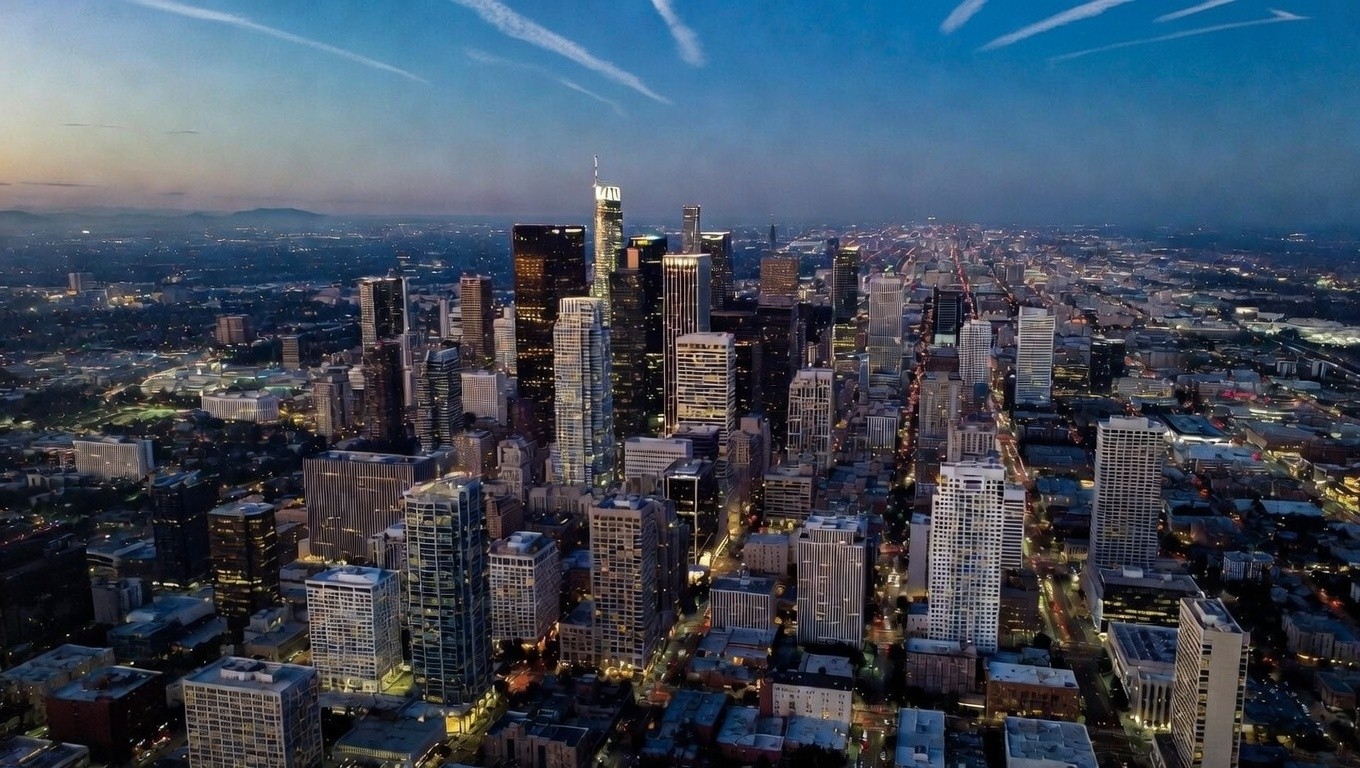
Carson and the Harbor Communities
Drawn by shipyard hiring after the war, Samoan families arrived in Carson and Wilmington. Tongan congregations took root further east, toward Pomona. Neither group produced an enclave on the Chinatown model. What emerged instead is a Pacific population across two dozen municipalities, its gathering done in church halls. Distance governs how this community organizes itself.
Because the jurisdictions multiply, one family can face three school districts and two county offices inside a year. Huri sends the district office a Gagana Sāmoa version of the enrollment notice and a Lea Faka-Tonga version of the tenancy letter. Portside business belongs to our Long Beach node, which owns the harbor side of this metro. Vocabulary tracks the English original clause by clause.
The two levels of Samoan, formal and colloquial, sound almost like separate languages to an English-speaking clerk. Plain speech suits a parent letter, the honorific a funeral program. Honorifics stay intact there, down to the title of the officiating minister. Confusing the two embarrasses a family in front of its congregation.
Al Lolotai and the Los Angeles Dons
Albert Lolotai, a Sāmoan-born lineman raised at Lāʻie on Oʻahu, entered the National Football League in 1945 as the first Polynesian in the American professional ranks. The following season brought him to Los Angeles for four years at guard with the Dons of the All-America Football Conference, the club to open big-league play at the Coliseum. Samoan was the mother tongue. English arrived at nine. Neither language left him afterward.
While wrestling professionally as Alo Leilani after 1950, Lolotai took the Hawaiʻi heavyweight belt on several occasions. Televised bouts did put a Sāmoan surname into American living rooms week after week. That exposure came two decades ahead of the Polynesian pipeline into American sport. In 2016, twenty-six years after his death at Pago Pago, the Polynesian Football Hall of Fame inducted him.
Anyone tracing the descent finds that the career survives in two spellings. League ledgers drop the macrons, while genealogies and church rolls keep them. Huri transcribes such material into one orthography, which lets a descendant set a match program beside a parish entry. The public biography of Al Lolotai fixes the dates and the appearances. Spelling is the open problem. To close it, a transcriber checks the surname against village usage.
The Springs at Kuruvungna
The springs are still there, under a West Los Angeles high-school campus, on the ground of the Tongva village of Kuruvungna. Something over twenty thousand gallons emerge daily, as they did for the Portolá party in 1769. The state historical listing gives them number 522. Classrooms opened above the water in 1924 under a president’s title: the springs kept the Tongva one. The flow has never stopped, through drought and through the paving of the basin.
Signage came late to the Tongva name. However, restoration of an Indigenous toponym over a mission-era one has become ordinary across California. The filing behind such a restoration involves heritage submissions and municipal correspondence. Either the diacritic survives that traffic or the claim weakens. Across the Pacific, language revitalization turns on the identical point.
Delete one macron and a heritage dossier loses its evidentiary value. The marks therefore survive conversion and reimport, Sāmoa and Papeʻete alike, the exports written in Unicode with the okina at U+02BB. A curly apostrophe fails the audit. The cultural and intellectual property handovers include only the checked character set.
Oceanic Collections in Westwood
There is Oceanic material in the Fowler Museum at Westwood, catalogued beside the African and Latin American collections. The Wellcome gift of 1965 formed the core of the Pacific collection. Curators of an earlier generation wrote the object entries in English. The Samoan and Tongan names went down as approximations. Catalogue reform has likely reworked some of them already. Source-language terminology is the norm today.
In front of the case, a Carson family wants the ʻie tōga called by its Sāmoan designation, with the maker’s district attached. It falls to the translator to fit that into forty words of wall label. The object text goes into Gagana Sāmoa and back into English for the curatorial check, a method involving two linguists and one glossary. For cultural education programs, field tapes go the other way, from a spoken Sāmoan account into a bilingual transcript.
Loan agreements between a museum and a Pacific state institution bring a second body of text, an obligation few lenders anticipate. Condition reports and provenance summaries cross two legal systems at once. Two columns, Sāmoan and English, share the page. Our academic institutions team maintains a permanent glossary of Oceanic object names, revised whenever a curator and a community authority differ.
The Airfield and the Pacific Schedule
Nonstop schedules link the Los Angeles airfield to Papeʻete and to Nadi. Those two Polynesian services have lasted decades. The field itself began as a bean strip in 1928 and answers today to the public airport authority. Crews and freight handlers on the Pacific rotations produce documents in three languages a day. Two customs regimes govern the Nadi traffic alone.
Given that the regulator fixes the terminology, invention has no place in a dangerous-goods declaration. A translator coining a Samoan word for an oxidizer does not help the shipment. Against the published English source, Huri maintains the cargo and dangerous goods term bases. Variant spellings stay apart, unmerged.
Material aimed at the flying public pulls the other direction. Gate announcements sound wrong in the grammar of a manual. A Harbor-community speaker records the Gagana Sāmoa track. The delay notice then sounds native to the terminal. Huri hands over the script and the timed audio together for passenger services, at the sample rate specified in the airport documentation. Island pronunciations follow the airline manifest.
Sea Surface Records from the Arroyo Seco
For more than three decades the Jet Propulsion Laboratory has managed the American side of satellite ocean altimetry from the Arroyo Seco, north of the city. The instruments measure sea-surface height to the centimeter across the Pacific basin. For an atoll state, that measurement is the evidentiary basis of a climate claim. A federal contract with a private university underwrites the arrangement. No island administration can generate that measurement for itself.
Gagana Sāmoa has no inherited word for radar altimetry. Scientists and elders must build the equivalent together in one session. The result then goes into a term base tied to the earth observation lexicon. On the spot an elder can veto a coinage. Which coinage the elders reject, Huri never ships.
Downstream, those numbers surface in coastal-defense budgets and insurance submissions. A mistranslated confidence interval costs a district its funding round. Back-translation catches the slip. The numeric fields stay locked against edit. The climate adaptation infrastructure texts spell the units in full. The first column gives metric, and the second, imperial.
Pacific Voices on the Scoring Stage
It was on scoring stages in Los Angeles and Burbank that the Moana sessions took place, the lyrics in Gagana Sāmoa and Tuvaluan alongside the English. Full dubs followed in Reo Tahiti and ʻŌlelo Hawaiʻi. The Tahitian version was the first feature-length dub in that language. Three Polynesian languages hold full-length versions of the picture. The published soundtrack listing documents the sessions.
Since then, the city’s post-production trade has absorbed most Pacific-language versioning for major releases. Studios are commissioning those versions on a scale unknown in the 1990s. To match a lip flap and keep a sung meter at once takes two different craftsmen. Under that pressure, Samoan word order resists compression. A lyricist rewrites the songs. A subtitler handles the dialogue. The two jobs proceed independently.
One source text yields the timed subtitle file and the dubbing script. Audio-visual adaptation follows as a second stage. A term sheet fixes what the glossary decided. Three years later a sequel keeps the vocabulary of the earlier release, down to the spelling of the proper nouns. Our cultural authenticity checks put a Samoan speaker in the booth for the final playback.
National Status and the Civil Record
Since 1900 birth in American Sāmoa has conferred United States national status without citizenship. No other population in the country holds that position. American Sāmoa remains the one populated territory outside the citizenship grant. Naturalization is therefore an ordinary step for Samoan applicants, alongside the civil records requested by a consulate or a court. Tongan applicants arrive on family-preference visas and enter a different queue.
In practice these are short papers with long consequences: a birth entry from Tutuila, or a customary attestation of a matai title. A mistranscribed village name can stall a petition for a year. Huri translates the document and sets a parallel transcription of the Sāmoan or Tongan original beside it. Legal documentation ordinarily accepts that format.
The issuing authority retains the original. Huri does not certify and does not notarize. Under a signature of their own, clients file the translation onward. Rules differ by county and by consulate. The current checklist lives on our mobility and remittances page. The extract leaves this office with the toponym spelled as the civil rolls spell it.
Pacific Linguistic Matrix for Los Angeles Hub

Huri Translations
Tel. +689 89 205 483
[email protected]
PO BOX 365 Maharepa
98728 Mo'orea
French Polynesia
N°TAHITI 876649


Social